Wednesday, December 26, 2012

Merry Christmas!

Merry Christmas and many blessings to all!
From the Christmas Midnight Mass at the Agana Cathedral - we're there in the upper right section. Got home a little after 2 am, following Mass and the eating of bunelos dagu with the Archbishop.

Wednesday, December 19, 2012

Advent in Guam as seen by a 6 year old

View from our front door of the neighbor's Griswold worthy light display and our own puny  lights. Good cheer in the tropics.

Our indoor tree - the real version, not plastic, although since it was flown from overseas, probably not an environmentally kind choice

Part of the belen at the Seminary

Seminarians' Christmas concert - singing in Maltese, led by an old priest

The Holy Family portrayed by a real family at the Seminary concert.

Another view of the neighbor's. They've added more since.

Seabee truck decorated for caroling. 

Praying Mantis laying eggs on our palm tree.

Self portrait by six year old

Moon portrait

Orchid at night.


Gingerbread houses from a kit

Giving tree - our second son's Eagle Scout project.
Christmas party take 1
Christmas party take 2. Note Notre Dame bowtie: Go Irish!


Wednesday, December 12, 2012

Reading Brief Light in Advent


It came, it came! A present for me!  ‘Tis the season for packages, but most of the ones arriving are surprises I’ve ordered for someone else.  A few days ago, a large envelope arrived for me. It’s always so exciting to get a package in the mail. This one contained SallyThomas’ new book of poems, Brief Light.  Happily, my expectations of something satisfying were fulfilled.

The title seems appropriate for Advent, a season of short, gray days, and several, if not most, of the poems are wintry in setting and sometimes in tone, for instance, as in “Copperhead” when the hermit kills the snake, and in “Acedia,” in which the title turns the listlessness expressed in the poem into a spiritual struggle. In “Poem” there is a “winter of your books.”  Not only are daylight hours in Advent brief, but the season itself is brief: the cheery candles and Christmas lights are usually torn down before New Year’s. And brief, too, are the moments of inner light that these poems expose. As the busyness of the season threatens to overwhelm, occasional moments, like when the candles are lit before Mass, or during a reading at Lessons and Carols, provide brief opportunities for reflection and enlightenment, and a fleeting glimpse of grace. And that’s what these poems bestow: little glimpses of something extraordinary in the everyday.

Although there’s a poem for Ash Wednesday, one for Advent, one for Christmas, most of these poems are about ordinary time. I find myself using liturgical language here, but most of the poems aren’t overtly Christian, and they are anything but sentimental. The book includes poems that are about love and joy and grace, but also poems about loneliness, oddness, infidelity.  For instance, in “Tornado Watch,” a dog looks pleadingly for protection from the storm, but nothing can turn the path of the storm: “What can I do?” However, the line could be read, not as an excuse for failing to provide protection, but in a tone that suggests “my powers are nothing compared to the awesome mightiness of nature.”

In “Introvert” the husband’s love has been unable “to expose the secret soul,” which he thought would be like forcing blooms at Christmastime. And yet, for 20 years he has been trying to know his wife, although he comes to“loves her inwardness, the private glance / Like a sunrise from her heart.”  I like that acceptance of mystery, as opposed to the modern cry of surrender: “He doesn’t know me!” The recognition that, even after years of intimacy, we fail to know one another doesn’t negate love, but perhaps strengthens it.

The book is full of short poems that affirm the mysterious workings of love. Some of my favorite lines: from “For You,” which answers a child’s question “Am I your favorite?” with “You stand before me, asking that my heart / Declare, You first, you always. And it’s true. / It works this way. Love’s strange, elastic laws / Grant each child its undiluted part, / and that, my love, is what I offer you.”

I like the image of a person looking at her home from outside in at night, who notices happiness in the glow of “Lamplight.” And the idea that nothing stirs but “my heart” under the keen eye of a falcon in winter.

I love the juxtaposition of beauty and strangeness in the closing lines of “Frost”: “Tricky winter light and my own eye / Bending the world, if not to beauty, then / Strangeness, on which the cold sun / Shines, and the grass shines back like knives.”

I like the humorous imagery of “Laundromat” with “the woman whose bedroom slippers slap / Linoleum the way she’d like to slap / You, when you’ve let your clothes pool / Five seconds to long at the bottom / Of the dryer.”

But I think my favorite is “Anniversary”: “Still, this morning I’m so grateful / You’ve pinned your socks together for the wash, / I’d dress up now and marry you again.” My husband doesn’t pin his socks, but he does perform so many small ministrations out of love and generosity that I frequently am reminded of how much I love him and how undeserving I am of his love.

I think my students would like these poems, too. As I mentioned a couple posts ago, they got a little tired of all the modern poetry about alienation and isolation.  Sally’s poems don’t shy away from alienation, but they also note connections. Like in “New Year,” one voice recognizes “Another year gone,” but the other responds “Another year begun.”  Life goes on, winter is only a brief period of dormancy before Spring’s rebirth, and that’s a good thing, not a source of angst.

Plus, I love the photo on the front cover. It may actually be England, but it reminds me of one of the chilly, foggy mornings in the Midwestern farmland where I grew up.

Friday, December 7, 2012

On parish life


Can I add my two cents on the parish life conversation? (link, link, link, link and slightly different link. Can you tell my class is over? I'm reading blogs again.) Good points all. This topic is a conversation starter - good for creating community, evidently. It’s a conversation that my husband and I have had a various points in time when we were in parishes that were successful at involving parishioners and when we were at parishes that weren’t.  I don’t have a formula for what makes a great parish, because I agree with my sister that there is no one size fits all community.  I also think my sister is right that we shouldn’t expect our Church to fulfill all our needs. On the other hand, I think Melanie’s quote of Cardinal Ratzinger is great – our Church must be a source of brotherhood and community.  We meet for communion at Mass not just to receive Christ in the Eucharist, but also Christ in the Word and Christ in the People. In Christ, we're all family, so we should try to act like one.


When we were growing up, my parents did not hang out with friends from church. Since they were converts, they didn’t grow up with the people in our parish, and we had moved out to a rural area where we had to drive 15 or 20 minutes into town to go to church, so we didn't have any neighborhood connections, which create community naturally (as do school connections, but we were public school heathens). Additionally, my grandparents and some cousins lived in town, so my parents hung out with family or friends they had from the neighborhood or from school. 

True friendship can’t be forced, but it can be facilitated, especially in communities where people come and go. Like lots of bloggers, apparently, I am not a great one at small talk.  I tend to either have nothing to say or too much. But I appreciate when other people come up and talk to me. And as we’ve moved around, I’ve gotten better at being the person to start conversations. I don’t know that coffee and donuts after Mass is THE answer to creating fellowship, but it certainly helps.  You can tell after a couple of Sundays which families have kids that would mesh well with your own by the way they are rushing up to grab donuts. 

A couple of our parish experiences stand out. Both had priests who would tell you what to do. At our parish in Mississippi, the pastor told me in during my confession that we were going to start taking communion to the old folks’ home. Brilliant! It was not easy, but so worth it.  He also told people what they were doing for the parish festivals, told people he’d see them at the parish dinner, gave your kid a reading for the stations of the cross, made sure he assigned different people to bring stuff to this meal, that prayer service, the other event… He had a gift. And he said it all with an Irish brogue and a smile, so everyone obeyed.

This parish was large and dynamic (I just read a review of a Matthew Kelly book about what makes a “dynamic Catholic” –as opposed to just “active”, ie. churchgoing – and the short answer is prayer, study, generosity and evangelization.) There was always something going on, and usually someone reached out a personal invitation. (Southern Hospitality?)

In Virginia, our priest wasn’t quite as assigning.  In fact, he was rather shy and bumbling, but good-humored.  The effect was that he made people want to take care of him.  Pasta with the Pastor during Lent was huge, although this was not a large parish.

It’s worth noting that both of these parishes had schools. We were homeschooling in Virginia, but our kids were involved with the parish scout troop and CCD.  They made friends, so we made friends through them.  And our homeschooling friends also got together for spiritual activities like Armata Bianca and saints’ day activities. The Mississippi parish also had a school, plus an active youth group and lots of opportunities for kids to get together for service work. The teens had a yard work group that cleaned elderly parishioners' yards.  There was Friday night PLAY, where parents could drop their kids off for food and games with a catechetical bent (I can’t remember what the acronym stood for) and then go out for a date or stay and visit with each other.

I also have to give credit to Regnum Christi when we were in Illinois and Indiana for providing spiritual connections. The gospel reflection groups were what kept me involved – real, nurturing friendships were formed through them. Although I was uncomfortable with the large group’s “recruitment” mentality, I did benefit from the small group’s spiritual sustenance.  Another friend in Illinois who had a large yard and a basement hosted a rosary group with a few women from different parishes  - people she liked or thought she would like. Kids prayed the first decade with the moms and then they played, while moms finished praying and then talked. The shared prayers created an intimacy that led to real friendships – these were the people who would bring you dinner when your baby was born or take your kids for an afternoon while you napped with a new baby.

In our current situation, we attend chapel on base. It’s a very small community with almost no “ministries” except CCD  - and coffee and donuts.  We know some families outside of church from our neighborhood or the command, so we socialize together without officially organizing anything.  I keep wanting to start a youth group, but my boys don’t want me in charge. Fortunately, some opportunities have come up for the kids to get together – a dinner for foster kids, a parish picnic at the beach, a group getting together to go see a movie on base. Most of the kids go to school together so they have that connection, too. 

Wanting a little more spiritual nourishment this season, I just invited a few women over for a gospel reflection group for Advent.  Only 5 showed up, and I kind of bumbled through, not having any real vision for how to facilitate with a group of peers (didn’t want to be in teacher mode), but my daughter made delicious sour cream coffee cake and cranberry walnut bars, so maybe they’ll come back for the food!

Every time we move, the best new friends we make are those from our parish.  I do tend to show up at our new parishes and check out the faces in the pews looking for potential friends. I scan the bulletins looking for opportunities to meet people. We look for parishes that have kids in the pews about the same age as my kids because my kids often make my friends for me. 

Lately, one of my conundrums has been keeping track of the people who were my good friends at different times and places, especially as I think about writing our Christmas letter. I wonder how many of these friendships can I sustain over time and distance?  

But I don’t want to lose track of these people who really went out of their way to help me when I was struggling with small children. As I’m sitting here trying to remember what we did in different places, what I really remember are the kindnesses of a few individuals, the personal invitations from people who weren’t afraid to invite someone with 6 kids over to their house (or to a beach barbecue, at any rate). These are the people who taught me by example how the faith should be lived: they welcomed the stranger, not with idle chitchat but with real concern.  They went out of their way to offer assistance and kindness.  Thinking of them fills me with love – and sorrow that I haven’t always lived up to their example -- and wistfulness that we can’t all live in some Catholic ghetto somewhere, where we might annoy one another sometimes by too much proximity, but we might also sometimes get a foretaste of the joy of the communion of saints. 

Thursday, December 6, 2012

Advent links

Yesterday we played on this website:

http://www.stnicholascenter.org/pages/stories-legends/

Today we are looking at this one:
http://www.metmuseum.org/metmedia/interactives/adults-teachers/the-christmas-story

Worthy distractions from grammar.


Monday, December 3, 2012

The semester winds down


I am in the midst of grading finals for my classes this semester. It is partially by intent that I have not written much about teaching and partially by default because teaching (and preparation and grading) has consumed a great deal of time. I taught two classes this semester, Freshman Composition and Introduction to Literature.  After teaching for four semesters now, I’m beginning to see the benefits of experience – and to see how much more experience I need.

For the first two semesters at MGCCC, I felt like I was floundering, as I’ve mentioned before. The second semester spent teaching World Literature went much more smoothly, but the first semester flopped.  Never having taken Freshman Composition, I had no idea how to manage the class time. The students looked perpetually bored. Since I was a replacement for a teacher who left unexpectedly early in the semester, I didn’t have time to prepare, nor did I have a firm concept of goals or capabilities. A number of the students failed, mainly because they didn’t turn in their assignments, but I can’t help but feel I failed to teach any of them how to write a college paper.

I still question my ability to teach analytical writing, but after scouring the internet for some teaching ideas and devising a syllabus that divided up the work into small chunks, I found a groove that seemed to work.  Class began with a short writing prompt, after which we read and analyzed sample essays. Then the class worked on applying some technique or other to their own writing – writing a hook for their introductions, crafting thesis statements, adding transitions, varying sentence length.  Sometimes I brought in a grammar worksheet to review, and sometimes we did group critiques to fill out the hour and a half of class time. 

I struggled a bit to find readings and prompts. Their text needs to be tweaked for this island audience, a mixed age group, most of whom work and have families. One student came from the prison through the study-release program. Finding essays that appealed and applied to their lives was more difficult than I anticipated. Their text contains a decent selection of essays, but many seem chosen for college students who live in dorms off their parents’ pennies – what may be relevant for many students just seemed vacuous here.  A friend mentioned that his freshman writing class was taught by a film professor and the whole semester focused on writing about classic movies. Perhaps choosing a theme for the semester would help unify my teaching and help the students with invention.

Another hurdle was been adjusting expectations.  MGCCC required 5000 words of written work over the semester. GCC doesn’t have a set requirement, so I assigned 3 papers instead of 5, based on the recommendation of another teacher.  I ended up adding three shorter papers, which I'll do again next year, although I definitely won't do a literary analysis first and a process paper last. I tried to be somewhat systematic about what needed to be included in their essays, but I can see how it would have been helpful to break down the assignments even more and to spend more time on generating ideas.

Ideas might have come easier if I weren't so determined to stay away from current political issues.  I just didn’t want to get into gay marriage and abortion in class, although a few students chose those topics for their papers. I recommended they chose topics that applied to their majors or to their work or to the local community (for instance, in preparation for their argument papers, we had an in class debate about the proposition on the ballot here to legalize for-profit bingo), but invariably a third or so chose generic political topics that they treated superficially. I suppose this is every composition teacher’s bane. How to encourage critical thinking without getting into a debate?  The thought of tackling anything political made me feel rather cynical and curmudgeonly.  I am so thankful to have only experienced the periphery of politics this year.

Surprisingly, a couple of students thanked me as they turned in their finals. But I'm sure a few who didn't show up to the final will curse me...

***
The literature class went more smoothly, mostly because I feel more comfortable with the material and how to present it, but also because I had a lively and engaged group of students, even though we met late in the evening – 8-9:30 pm. All credit for their liveliness goes to food.  We ate, then we talked. Starting about a third of the way into the semester one of the older students brought in fresh donuts.  They were devoured, and a tradition was started.  Some student or other usually brought snacks, and I’ll occasionally brought in something – shiu pao when we read “A Pair of Tickets,” teas and coffees when we read “The Things They Carried,” which makes me thirsty, and chocolate chip cookies with southern pecans for “Everyday Use.” 

One of my students was a grandmother who delighted in bringing soups, noodles, rice – nearly full meals. After I mentioned that my husband liked the pickled papaya her husband made, she brought in a large bag of it. And after her nephew’s wedding, she brought homemade lumpia for the class, plus a huge bag for me to take home.  She had a colorful life experience to match almost all of our stories.  I especially was curious about a love potion she was talking about during the class we read love poems. A few other students confirmed that there is some local spicy potion that makes women stay with their dead-beat husbands, and makes men fall in love with homely girls.

On the last day of class, we had a veritable fiesta: red and white rice (mandatory at every celebration), short ribs, shrimp kelaguen, spam kelaguen, baked spaghetti, brownies and blondies (my contribution), oreo cake, cheese cake, grilled eggplant in vinegar that was super yum, pan de sal, tea and soda.  Did I mention that there are only 10 people in my class?  Even though they were talking about class, I had to make them stop eating with about 45 mins of class left so they could take their test, and everyone hung around after the test to talk and eat more.

They also gave me presents: a story board, a hat, a mug, a beach towel. . . I was so touched, and felt cheap for having nothing for them but a card.  Their generosity was overwhelming, considering one of the older ladies was homeless for a couple weeks, and a couple of the younger students are living on their own, going to school, and trying to live off minimum wage jobs. I was tempted to give them all A's; at any rate, I know they at least will remember their literature class with fondness, and perhaps come back to some of the stories and remember how much fun they had making up skits for their poetry projects. 

About the class: initially, I thought I would stay with the stories and poems I had picked for MGCCC because they were by famous authors or I liked them. But after multiple complaints about all the death in the stories we were reading (almost everyone disliked “A Good Man is Hard to Find”), I tried to pick stories with more upbeat endings. (They loved “Gift of the Magi” and “A Pair of Tickets.”)  For the poetry unit also, I tried to incorporate some more contemporary poems – so often a bit melancholy - in addition to the poems I felt were “significant.” But some of these were too inaccessible. Autumn and Spring are simply concepts, not experiences, for most of the students.  “The Love Song of J. Alfred Prufrock” was received with complaints and incomprehension. Meanwhile, Elizabeth Barrett Browning’s “How do I love thee” sonnet, which I thought to use to illustrate hyperbole, was received with sighs and praise.

But why not enjoy poems to appeal to popular sentiment? Dana Gioia’s essay “CanPoetry Matter” critiques poetry that only speaks to other poets or to the critics in academia.  If I want my students to enjoy poetry, to come back to it, they need to read some poems that resonate with their lives, poems that are fun, poems that don’t require footnotes. So I wish Gioia as editor of our literature text had included even more happy poems that weren't Shakespearean sonnets.

I don't think I want to be like Yvor Winters teaching corrosion and distrust . . . 

On Teaching the Young

     The young are quick of speech.
     Grown middle-aged, I teach
     Corrosion and distrust,
     Exacting what I must.

       A poem is what stands
      When imperceptive hands,
     Feeling, have gone astray.
     It is what one should say.

     Few minds will come to this.
     The poet’s only bliss
     Is in cold certitude—
     Laurel, archaic, rude.
Yvor Winters, “On Teaching the Young” from The Selected Poems of Yvor Winters, edited by R. L. Barth. Used by permission of Ohio University
from www.poetryfoundation.org

Wednesday, November 21, 2012

Happy Thanksgiving


Our thanksgiving feast for 12 has become a party for 24 in the last six hours. A couple days ago, I was feeling a little sorry that we weren’t a bigger crowd, since I bought a 28 lb turkey, but we found some friends to feed, and now my husband is afraid he won’t have leftovers.

And I’m sitting at the computer… The turkey is brining (an experiment – I hope no one gets e. coli), the rolls are rising, the flavors in the cranberry sauce and relish are marrying happily in the refrigerator. Pie crusts are chilling, and pie fillings are cooling. The house could use a swabbing down, but the kids are working on their rooms, I’ll do the potatoes, bathrooms, and floors in the morning, and that’s about all I’m going to concern myself with.

That’s the joy of living on this island – standards are relaxed. People are just happy to have somewhere to hang out together and eat.

Of course, tomorrow morning I may be pulling my hair out and doing the crazy dance when I realize how much I’ve forgotten to do…

For now, though, I’m taking a moment to recollect, to remind myself to be thankful, and to share one of my favorite poems which we read in class last night, even though a few days ago I was feeling sorry for myself for not being with extended family, for failing students, for having a son who just took a driving class, for calling someone I should know the wrong name, for having to pick new schools for kids who don’t want to move. There’s always something to get you down. 

But now I’m looking forward to a housefull to feed and to sitting on the porch drinking wine while the kids play streetball and to eating pumpkin pie and pumpkin cheesecake and to having plenty.

Love Calls Us to the Things of This World

BY RICHARD WILBUR

The eyes open to a cry of pulleys,
And spirited from sleep, the astounded soul   
Hangs for a moment bodiless and simple   
As false dawn.
                     Outside the open window   
The morning air is all awash with angels.
 .....

Yet, as the sun acknowledges
With a warm look the world’s hunks and colors,   
The soul descends once more in bitter love   
To accept the waking body, saying now
In a changed voice as the man yawns and rises,   
    “Bring them down from their ruddy gallows;
Let there be clean linen for the backs of thieves;   
Let lovers go fresh and sweet to be undone,   
And the heaviest nuns walk in a pure floating   
Of dark habits,
                      keeping their difficult balance.”

See The Poetry Foundation site for the whole poem

Wednesday, November 14, 2012

Always learning


Remember Able Baker Charlie? The little mouse in the Richard Scarry books who bakes up white, fluffy loaves bigger than himself? In one story Charlie accidentally bakes a babydoll who says “mama” inside a loaf so that all the critters think the loaf is talking.

I just learned that his name is a reference to the phonetic alphabet used by the US from 1941-1956.  The current words for “ABC” are “Alpha, Bravo, Charlie,” but before the international code was determined, the US used “Able, Baker, Charlie” when they wanted to transmit messages clearly. Were I older or a WWII history buff, I probably would have known this, but learning it even now gave me a brief burst of mimetic pleasure. Aha, Richard Scarry, I know what you are up to!

  Although the family didn’t go to Tinian this past weekend, we let our 12 year old son go with his friend and his friend’s dad.  The three of them toured the island and saw where the Enola Gay was loaded up with the nuclear warheads to drop on Japan. They also saw the four remaining runways from the second world war, which are named Able, Baker, Charlie and Delta. Although the island is small, during WWII it was the busiest airbase in the world. Thousands of fighter jets took off and landed from these four runways built by the Marines during the War in the Pacific, and 40,000 troops were living there at one time (now the population is about 3000). Our son regaled us for several hours with his new knowledge about Tinian, and I felt worse about not going. (Except that it turned out that the special fare was actually only a one-way fare, so our family would have had to spend about $1000 more than we thought.)

Richard Scarry was not one of the troops on Tinian. He served at the Allied Forces Headquarters in North Africa and Italy as an editor, writer and art director for the Morale Services Section. His career as author and illustrator of children’s books took off after the war.

It is always rewarding to find an allusion where you never saw one before. The world is so full of a number of things. 

The plane to Tinian from Guam. Seats for 8.

My son's view from his seat.

I think this is part of  one of the runways.

A spout creating by a wave crashing into a cave.

A nuclear bomb pit, now filled in.

The view from Suicide Cliff. The story is that Japanese propaganda led some
military and civilians to jump to their death rather than be captured and tortured
by Americans. Several thousand Japanese were killed in the Battle of Tinian. Only 314
were captured. Meanwhile, only 1500 or so Americans were killed. Are the numbers high for the
Japanese because of the suicides?


The boy took several photos of this sign, one of 2 gas stations on the island. I
think he was impressed with the cost.

Sunday, November 11, 2012

The crust crumbles


It’s been a short week, full of activities. In addition to the usual sports and classwork, there’s been a fortieth birthday party (one of several this year?) and a baby born. I finally was able to pay forward the favors I’ve received as a parent of multiple children and babysit for kids whose mom was having a baby. 

Since we’ve rarely had family close enough to stay with our kids when a baby was born, we’ve had to call on neighbors and friends to watch our other kids while my husband and I ran off to the hospital.  (A by-product of military life and the general diaspora of modern life - you are always calling on new friends for favors that used to be the job of extended family.) Once my mom and dad were on their way home from vacation and were able to make it to our house before we had to go to the hospital. That one time my dad babysat while my mom, a labor and delivery nurse and the best birthing coach ever, and husband took me to the hospital. Providentially, that was the only time I had a baby in the middle of the night. The rest of them were born during the day while the kids happily played with friends. 

One other time, I was going to watch our next door neighbor’s toddler during the birth of her sister, but when the neighbors tried to call us and even banged on the door in the middle of the night, we never woke up.  I felt so bad about that moment that I went and bought a new phone for our bedside, even though up until then, I didn’t want a phone in our room. Now we continue the phone by the bed because we anticipate the call in the night that someone has died, although we’re down to one great grandmother.

So I was glad to be able to feed and put to bed someone else’s children, who all went down obediently, although they kept asking when their sister would be born.  We met this family because they home school also, and although they are not Catholic, this is baby number 5 for them.  Stepping into someone else's home is always an opportunity to compare.  These kids were all well behaved, and I envied their bookshelves and neat home school workspace, and their maps on the wall. Our efforts looked weak in comparison.  It was hard to turn off that inner voice of self-criticism.

As I tucked the kids in, I told them that their sister would probably be born by the time they woke up, but I anticipated spending the night on their couch. But this baby wasn’t waiting. I don’t think the parents were at the hospital more than an hour before she was born. So I got to sleep in my own bed.  And a new baby was welcomed lovingly into the world.

****

The other event of the week was a nonevent.  When I came home from class late Thursday night, my husband announced that we were taking a trip over the weekend.  Some of his work friends were going to Tinian, the next island over, famous for being the launching site of the Enola Gay, for a mountain bike race. The mayor of the island had arranged a half-price airfare to attract racers.  The biggest (only) hotel on the island, the Chinese-run casino, was offering a good rate, also. My husband wanted to take our whole family on a last minute three day vacation. 

I couldn’t get my mind around it.  On Friday I had to take a kid for a hearing test in the morning, then had to prepare for and host company for lunch, and had to shoo my company out to leave for a cross country meet.  The thought of packing in the evening for a trip to an island where I would be sitting at a casino with the kids while my husband struggled through a six hour or more bike race was not appealing. 

Anxiety set in. I told my husband in the morning that I didn’t want to go.  He tried to convince me. In the afternoon, panic started to set in. While we didn’t have a lot planned for the weekend, we still had soccer, had to serve at Church and to teach CCD, and had papers to grade.  I didn’t want to make time Friday to make calls for subs.  I had entertained visions of addressing a few items on a list of niggling things to do that keeps growing. We are talking about taking trips over Christmas and Spring break – we should be saving up and planning for those vacations.

I have no sense of adventure, no flair for spontaneity, I guess. But this didn’t sound like an adventure. It sounded like work. The younger kids didn’t want to go. I set my heels in. My husband made me call the airline to let them know we wouldn’t be making our last minute reservation, which I did with a sense of relief.

 ****

As so often happens, after a good night of sleep, I woke up feeling differently. Why am I so rarely at peace with my decisions? I saw clearly that I had been driven by selfishness. My resentment about going was all because my time was being threatened.  I didn’t want to deal with the work of packing and unpacking, with the rush to get caught up afterwards on everything that didn’t get done over the weekend.  I like staying home.

But the older boys were disappointed. My husband was disappointed.  And on Saturday morning, I could see what I couldn’t see Friday night: that the initial discomfort would have been forgotten in the rush of adrenalin from taking off on a tiny plane across the ocean.  The wonder of being in someplace new would have offset the irksomeness of extra laundry.  The memories would have been worth the money spent on tickets, hotel, and food.

So in my guilt over not going, I’ve been trying to be entertaining all weekend, although a dark cloud of regret keeps coloring my mood gray. We checked off some of the items on that to-do list: errands and yard work Saturday morning. My husband repaired a couple car problems, which gave him a sense of accomplishment. I made dinner for the family with the new baby, and we had friends over Saturday and Sunday night, one night a family whose dad was gone, and the other, a doctor friend who just returned from a deployment to the hospital in Afghanistan (another story). My husband and I went on a long bike ride and swim early Sunday before church. We fit in a dive Sunday afternoon with the older boys, and my husband and the older boys went diving again early Monday morning before going on their scout hike, which was the other event that would have been cancelled if we travelled.  

Our busy life has continued.  But all weekend, I’ve felt choked by the sense that I let the family down.  Had we gone to Tinian, we would have spent the weekend together as a family. Instead we’ve gone our various ways, one kid here, one kid there.  I’ve already failed at what I announced a couple weeks ago I was going to do: be led by faith.

This regret and guilt is just one more piece of evidence at how weak my faith is. I find it difficult to let go of my failures. Even though on Friday my reasons seemed strong enough for NOT going that I was nearly in tears at the thought of leaving, I can’t be confident in the purity of my intentions.

Lay it down, lay it down. 

My decision means nothing in light of eternity. If nothing else, the emotional turmoil of decision making and regretting has succeeded in chopping away at the crust of complacency, making me little yet again. 

Tuesday, November 6, 2012

How to Feel 19 Again:


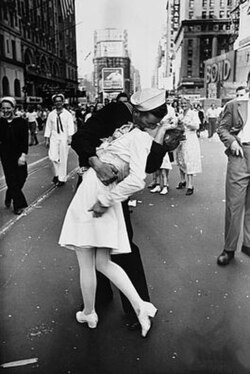
Make an unscheduled stop after Mass downtown in the middle of the day.  See a handsome man in uniform walking out of restaurant straight toward you. Realize, with a flutter in your chest, that that man is your husband leaving a business lunch.  Get swept up in his arms for a big smooch as the cars rush by. 


Saturday, November 3, 2012

Day of the Dead


In honor of All Soul's Day: photos of the souls in my prayers, my beloved grandparents. I realize that All Soul’s Day is a day for praying for the souls in purgatory, but I’d like to believe that my grandparents shortened their time there with all the love they gave us. I couldn’t imagine any better grandparents.  They were all involved in their grandchildren's lives. They were generous to us and interested in us, and their homes were like sanctuaries, especially in our turbulent teen years, when we viewed our parents as our adversaries.  

All Soul's Day is a day of celebration here in Guam. A newly arrived neighbor commented with incredulity about the man buying $250 of ugly silk flowers at the Exchange. The cemeteries are all cleaned up and decorated with these silk arrangements, which really aren’t especially lovely, except that they represent the fact that someone took the time to go to a gravesite and say a few prayers. We went to Mass in the chapel, not in the cemetery on base, where the chaplain said Mass in the morning. It is a small town graveyard that got incorporated into military property after WWII, but the base is open to descendents of the people buried there on this day, and our priest mentioned how these descendents bring their folding chairs and sit next to their mom or dad or auntie during the liturgy.  Some of them will go on over to another cemetery for another Mass with another family member.  Not surprisingly, this is a tradition that may die out; few of the people out decorating graves when I drove by one of the larger cemeteries looked younger than 50.  But I hope it survives. There is something comforting in the thought of spending a little time with the bodies of our dearly departed.  I have to credit my grandparents for taking us to cemeteries on Memorial Day to decorate with peonies the graves of my great-grandparents, at least the ones who died in town. 


I scanned some of these photos last spring after my grandmother’s funeral. I love the peek into my grandparents' lives as young people, full of vim and vigor, which is how my grandmother described her own grandmother. I miss knowing them as they were then. I wish my children could have known them as I knew them. And I hope that my children view their grandparents with the same unconditional, overflowing love I felt for these four people.  


Wednesday, October 31, 2012

Encounter with holiness


I know a few saintly people, but I've only been in the presence of one true saint while he was alive.  Here are a couple photos from the Vatican Piazza nine years ago - it was at the beatification of Mother Teresa, which happened to be the same weekend as John Paul II's twenty-fifth anniversary and a consistory of cardinals. It was great time to be in Rome - with people from all over the world in attendance, the reality of the universal Church was visibly evident and the joy in the crowd was palpable.


Happy All Saints' Day.
All holy men and women, pray for us.


See the babies? One is my daughter and one is my cousin's baby.
This one is actually from about1993. That's my husband's hand that JPII is holding. He had to knock down a couple nuns to get this close.


Tuesday, October 30, 2012

Working through the stack


About a month ago I finished Great Expectations, a project that took about 20 years.  I can’t say how many times I have picked up this book and put it down again without progressing very far. Actually, the honest truth is, I would simply see the book on my shelf and feel its disapproval with me for not reading. Waiting. Mocking. Pitying.

But joy! Finally, I began the book, dragging my feet a bit at the beginning, until at last I began to feel a kinship with Pip and Joe and an interest in their well-being.  Once Pip went away to London, I was spending more and more time in the bathroom catching up on his comings and goings and becoming attached to his friends.  Dear Mr. Wemmick, Mr. Jaeger’s clerk, and his Aged P. Poor Mr. Pocket and Matthew.

It wasn’t the plot that kept me returning. That Miss Havisham was not Pip’s benefactress was always obvious, as was the link with the criminal Mr. Magwitch from the Moors, although I didn’t guess his connection to Estella. The characters are all so much more eccentric than modern characters, although I have to admit they seem familiar – several of them resemble some people I know in some way or another. But really it was Dickens’ language that I couldn’t get enough of.  So rich, so varied - especially after reading contemporary fiction lately. I felt the same way after rereading “Young Goodman Brown” by Nathaniel Hawthorne again for my literature class. Yes, you have to go back and reread a few passages to make sure you properly followed all the turns of phrase. And sometimes it seems like being more direct would be beneficial to the flow of the story. But the imagery and vocabulary are so much more vivid than most of the short stories we read for class. It’s like the difference between European chocolate and Hershey’s. Hershey’s is good, but no match.

My edition of the book included two alternate endings, along with a biography of Dickens that seemed to suggest he preferred the ending in which Estella and Pip remain estranged. I have to admit that I preferred that ending myself. It seemed more natural, like Pip’s punishment for his superiority towards Magwitch and Estella’s for her inability to empathize and love, although in a story where all the plots and relationships tie up in a pretty neat little circle, perhaps the ending that sold better – the one with Pip and Estella reunited – is the way to go. Maybe Estella and Pip are humbled for their mistakes and able to love each other for who they are.

*******
Speaking of contemporary fiction, I also finished Clare Vanderpool’s Moon Over Manifest, a newer young adult book – came out in 2010 and won a Newberry medal.  I had to make my 10 year old daughter read it, and she didn’t love it, (She’s was on a Percy Jackson jag, but I’m thrilled to report that she finally finished Anne of Green Gables and is started on Anne of Avonlea. This makes me joyful!) but I enjoyed reading this story of a young girl growing up in the 1930’s. Abilene’s father is seeking work, and after riding the rails with Abilene for some time, he ends up sending her to live in a small town in Kansas where he once spent some time as a teenager. He leaves her in the care of a preacher named Shady, which gave me the creeps a little bit because I’ve been through the Virtus training for child safety.  A pre-teen girl living alone with an old man who is no near relation? Fortunately, nothing inappropriate happens – turns out Shady is ministering to hobos and lets Abilene wander where she will. Abilene gets to know the people of the town, including the gypsy-like Miss Sadie who tells her stories about two teen boys, Jinx and Ned. Abilene figures out that Jinx is her dad, and in the meantime she unites the town by asking them to share their memories.

It’s an engaging story and since it is told in flashbacks to 1917, it acts as historical fiction about both the Depression and the Great War.  It’s not a story that is destined to win hearts and become a favorite of hundreds of young girls, I predict, because it just doesn’t have enough heft. Abilene is spunky and curious, but she doesn’t do much but listen.  A valuable talent, but not one that inspires emulation.

****
Also blazed through another Alexander McCall Smith book about Precious Ramotswe to keep up with my father-in-law, but I never got around to finishing Michael Chabon’s Amazing Adventures of Kavalier and Clay. It wasn’t that I didn’t like it; it just couldn’t compete with all the other stuff I had to read for class before it’s due date arrived. I have been dipping in and out of several books I found at the library, just before they instituted a 25 book limit per sponsor. (I’d be more compliant with the rule if it seemed like there was a rush on books, but typically the only people at the library are a few young sailors on the computers.  People check out the mysteries and romances pretty regularly, and story time draws a modest crowd, but most days the library on base is pretty quiet.  You’d think they didn’t want the books to be read.  And in fact I was disheartened to see them boxing up a bunch of the old books that hadn’t been checked out in more than 5 years. I asked if they would be for sale, but the girl didn’t know. Since the librarian was let go to save money, no one who works in the library seems to know much of anything.  But my frustration is probably another instance of spinning wheels in a mud puddle.  Since people come and go here so quickly, change happens quickly on this micro-scale, and prodigiously slowly on the macro-side.)

******

Although heavier than Chabon’s book, V. S. Naipaul’s A Way in the World is the other book I finished.  Not really a novel, more of a collection of anecdotes that relate to each other because they all have something to do with Trinidad, but they don’t always connect.  Naipaul is from Trinidad, and this book is broken into chapters focusing on individuals who either were from Trinidad or somehow were connected to it by colonization or revolution, including explorers Walter Raleigh and Francisco Miranda, another character who is a writer like V. S. Naipaul, and two revolutionaries, the older one Lebrun and the other Blair. The book travels back and forth through time and space – to Trinidad, Venezuela, Spain, England, Africa.  I almost gave it up, but again, like the Dickens, it was the language that kept me reading. Some haunting passages: “Perhaps below all the accidental things about people – birth, character, geography, history – there was something truer. That was what I had always felt about myself. Perhaps all men, if they were given a wise and rational liberty, became worthy of Plato’s republic.”

The book is mostly a meditation on Trinidad, a place that Naipaul considers home, but to which he rarely returns. It is also an interesting look at colonization – its beginnings and its effects, which particularly interests me because we are in the position of being colonists right now.  It’s an odd book, not one to rave about, but also not one to dismiss.  Although slower and without plot like Chabon’s book, it had greater complexity and personal interest.

********
After moseying along, I at last finished Moonwalking With Einstein, Joshua Foer’s account of learning to train his memory and his success at the US Memory Championships. Basically, the message is you can train your mind to remember, but it takes practice and skill. The art is in learning to create a “memory palace” – a mental image into which you can position all the information you want to remember. Like I suspected, Foer finds that improving your memory is about improving what you notice.  Pay attention, in other words.

*********
And finally, my guilty pleasure: Diary of a Wimpy Kid books. My youngest son just bought Cabin Fever with some of his lawnmowing money. When these books first came out, I was skeptical, if not downright suspicious, of potential potty humor and other forms of degenerate jabs. All those drawings of Greg Heffley in his underwear, for pete’s sake!  But these things are downright funny.  I love them.  I can’t laughing – not a little giggle, but a guffaw  - outloud when I read them. Even though Greg can be mean to Rowley, Rodrick is scary, and Manny is a brat, the Heffley family isn’t broken like so many families in kids’ books – they even go to church regularly.

The newest book in the series will be out soon.  Greg Heffley in his underwear won’t be so funny when he’s in 9th grade, so I assume the series will have to end soon before he graduates from middle school. Cabin Fever just covers Christmas break, and my older boys were joking that the new book probably only covers a week or a day, so that Jeff Kinney can eke all the money he can out of the series before Greg gets too old to be funny.  The books are still making me laugh at any rate.

Thursday, October 25, 2012

On speaking your mind

I wrote the following a few months ago, and hesitated to post it because of my limited understanding of local politics and a concern about misrepresenting what the admiral said.

Since then, though, local elections have heated up, and these issues are even more in the news.  Guam does not participate in the presidential election, although military members and dependents like myself send in absentee ballots. (I've learned that the local ballots include the presidential candidates' names.  Guam has correctly chosen the winner of the presidential election in every race except when Ronald Reagan defeated Jimmy Carter.)  But elections are big news here, and candidates for mayor and local government representatives from each village are chosen, along with a nonvoting representative elected to US Congress.

The issues mentioned below, decolonization and the marine build-up, are still being debated.  I sometimes get the feeling that the US is sometimes seen as a military imperialist power.  It's uncomfortable to be in that position as an American who is supposed to promote freedom. I wonder if giving Guam a voice in the presidential elections would be a step toward its full participation in American citizenship. I still appreciate the Admiral's confidence in speaking out on the issues, but also wonder what compromises could be made. It seems to me that America needs Guam as much as Guam needs America.

***********************************************************************************
From August: One of the pleasures of military life is the opportunity to attend the frequent ceremonial events: hail and farewells, retirements, balls, changes of command, etc. This summer has been a busy one for turnover, there have been a number of change of command ceremonies.  They follow a similar format: the band plays as guests are seated, the important officers are officially piped in, an MC makes introductions, and important person makes a keynote speech. Then the outgoing commander gives a speech thanking everyone, the incoming commander gives a speech about how excited he is to be here, and the chaplain intones a final prayer. Finally, the commanders are piped out, and guests adjourn for snacks. The officers wear dress white uniforms, ladies get dressed up, and the civilian men here wear their best Hawaiian shirts or the Filippino barong.

As much fun as pomp and circumstance are, the refreshments are often the most memorable part of the event.  What is said by the speakers is usually forgettable.  But last month’s turnover between admirals was a little more exciting. The outgoing admiral's speech was critical of recent political discussions in Guam. We were squirming in our seats because the key players - lieutenant governor, senator, local representatives, mayors – were all present.

He actually touched on two controversies: The military build-up that has stalled and recent calls for Guam independence or self-determination.  The build-up has had a mixed reception here. Some locals support it, some do not. Some people perhaps acted like they opposed it in order to get concessions from the federal government, and now that no money at all might show up, they are supporting it.

The politicians are indirect in stating their opinions. They keep calling for more studies. There is some land in dispute for a shooting range that is near a popular hiking route. And there are concerns about the infrastructure and impact on the island from the potential increase in personnel.

Meanwhile, the calls by some Guamanians for self-determination and an end to colonization seem to be more of a younger person thing. I’m not in touch enough with the local political scene to be familiar with the dialogue about it, but I can see both sides. The US is far away, and perhaps some people feel like the government is using the island just for its strategic location for the military.

On the other hand, Guam gets a lot of money from the federal government.  The military also provides a lot of jobs.  And it sends a lot of people from the mainland who spend money. People from Guam with money for a plane ticket can come to the mainland for educational opportunities. Economically, it’s a good deal for Guam.  Environmentally and culturally the build-up might have a mixed impact, although I get a feeling that it’s people from the mainland who drive some of the sustainable future moves.

The admiral was clear about stating what he thought: the build-up is a good thing; de-colonization is not. And he has done a thorough study of history to support his opinions. About de-colonization: “That decision was made 50 years ago.”  Guam sent a representative to congress for some years, with instructions not to come back until Guam was officially a colony.  He pointed out that more Marines died on the shores of Guam than at Guadalcanal. The military here are willing to put their lives at stake for Guam and defend its shores again if necessary. They’ve built it back after typhoons and would do so again. He seemed confident that the military gives as much as it gets from Guam.

He also made it clear that the local government, without the aid of the federal government, would do very little to bring economic stability to the island.  He pointed out how much land the local government owns but does nothing with, including quite a bit of property handed over by the US government with habitable living quarters, which now are abandoned and rotting away (where my sons like to play pellet gun wars).  He accused the local government of caving in to a few activists on the build-up, and now it was time to “man up.” 

Here's the local write up with photos.


The admiral must have felt free to speak his mind after serving here years ago and again as commander of the region.  He knows Guam pretty well. And he knows his history extremely well. He’s been promoted to a three-star admiral, and he’s going to a war zone next. Why not say what he thinks? 

I'm typically a coward about speaking out.  Part of this is because I don't feel strongly enough about some issues. Sometimes I can see both sides. Other times I just don't see room for convincing someone to change a viewpoint. (For instance, Facebook posts are not going to win converts.) 

So I admire that the Admiral didn’t soft pedal his ideas.  He used humor but was direct. No one got up to leave; no one hissed. But I noticed several people besides myself looking around, thinking, “Did he really just say that?”  And I noticed that the local officials didn’t stay for the snacks, which were VERY good – fresh fruit, sushi, wontons, grilled kabobs, and delicious desserts.  Maybe they were offended, or maybe they just had other business to attend to.  Happily, they left those of us who did stay plenty to indulge in.

Friday, October 19, 2012

Rolling stones


The word is official. Orders are in hand. We will be moving again at the end of the school year. Our three-year orders to Guam are being cut short a year because my husband has been picked up for a command job, an honor but also an obligation.

When we first found out we were moving out here, I wished and hoped and prayed it would be for only two years. I dreaded the distance, the expenses, the remoteness. When we first arrived, I was depressed by the black mold everywhere, massage parlors everywhere, tattoos everywhere. I was disappointed in the schools. I grew tired of rain and heat. I was homesick.

But in between discovering the coral reef, learning to dive, meeting new people and making friends on base and off, finding a place at the chapel, joining the community of runners and triathletes, getting a job at the community college, and becoming familiar with the different Mobil stations in each community which are essential to understanding driving directions because road signs are uncommon, I began to feel at home. And I’ve got a garden going at last. Six fresh okra pods and 2 Japanese eggplants are simmering in my gumbo pot right now.
Picked these red zinnias a couple weeks ago in the back yard. Note the Thai peppers are drying up because they are just too darn hot.

The island now is familiar – like family. I’ve begun to love the place. I love having no traffic. I love the lack of materialism. I love the importance of families and celebrations.  I love our friends. I love only having one wardrobe all year round: island casual. I love flip-flops. I love island time. I’m never late any more!

The mold no longer catches my attention; the sky, the sunsets, the palms, the waves provide distractions.

But woe to those who get too comfortable! You will be handed moving orders! Were I to be miserable and bereft, we would probably get an extension.  Now we will have to say goodbye just as we were beginning to fit in.  Even though our move is still a little over 7 months away, already I feel myself pulling back from taking on responsibilities.

As I’ve observed before – it takes about 6 months to get everything that’s going to be unpacked put away and to figure out your way around a place. Then it takes about 6 months to plan a move (although often it happens faster because orders change or are delayed).  So we have about a year to enjoy life for every year’s worth of transition time.  Troublesome.

It would help if I had no hesitations about our destination.  On the one hand, most people are thrilled to go to Southern California. We lived there for a few months 12 years ago, and had a great time, but we lived in a furnished condo on the beach – a small perk of temporary duty. The weather will be beautiful. Our flipflops will still be our main footwear. We’ll still be close to the ocean, although the water won’t be nearly as warm or the sealife as colorful.  I’ll have to get a wetsuit. The national parks and museums and places to go will be wonderful. We’ll be living in the same day as the people we love – instead of 15 hours in the future.

But I kind of like NOT having any place to go that takes more than 15 minutes. I’ll have to face the traffic!  Dread. The consumerism! Dread. The gargantuan schools! Dread. And to visit family will take, not 24 hours of flying, but 24 hours of driving, at least.

I could continue to least my anxieties and concern, but since the year of faith is officially underway, I will make an act of faith and believe that we will love our California experience just as much as we have loved every other duty station.  Who knew that I would find myself, a Midwestern girl who never saw the ocean until she was a junior in high school, loving island life?

God has made the world a beautiful place, full of beautiful people everywhere.  Is there a bad place to live? Is there a place where you couldn’t find a friend? Surely not, as long as your heart is disposed to love.


A baby bittern disturbed by the mower and photographed by our middle son.
So my goal for the year of faith, which promises to be another year of change: be grateful for this life that isn’t what I expected, but is more. Be grateful for the many interesting people, with so many different stories, who are all willing to be a friend, even if just briefly. Be grateful for the universal church that provides instant community, instant belonging, wherever we go.  Be grateful for the confirmation of God’s existence in the love that we’ve been shown as strangers, a love that converts loneliness into friendship. My prayer for the year is that God will help me mirror that love to others, and help me forget my discomforts, my inconveniences, my selfishness. 
I think I've posted this one before, but I still can't get over the view from our front yard.
Reading is one form of escape. Running for your life is another.
-Lemony Snicket