Showing posts with label movies. Show all posts

Monday, November 30, 2020

Short reviews

 Happy First Sunday of Advent! 

Already, yikes!  I'd like to post something thoughtful about preparing for Christ, but I'm feeling unmoved by the traditional reflections. They are ringing a bit stale - is this what happens after years of repetition or is the weariness the result of too many thoughtful social media posts urging people to be nice and good?  

Granted, I'm a little grumpy after being corrected twice in as many days by the citizen police around here. Yesterday it was the little old lady yelling out her car window that we need to stop at stop signs on our bikes.  Yes, yes, I know bikers are supposed to follow the rules of the road, and I usually do slow down significantly on my bike at stop signs.  Yesterday we were guilty of what I would call a "California right turn at a stop" instead of a California stop - we turned right after slowing, instead of after making a complete stop. Meanwhile the geriatric volunteer virtue policewoman was doing some sort of slow U Turn in the intersection - equally dangerous, I might claim. 

Today my crime was letting the puppy walk on the grass alongside the sidewalk in the park where "NO DOGS ALLOWED" is clearly posted. I know dogs aren't allowed in this park. I edged off the sidewalk because an old man was approaching, and I was talking to my aunt on my phone while I was walking the dog, so my mask was down.  I was walking in the grass next to the sidewalk because I was trying to give this guy a wide berth so he wouldn't think I was spluttering Covid germs on him, but instead he yelled at me three times, "No dogs in the park! No dogs in the park! No dogs in the park!" Geez. I was obviously walking the dog on by and not playing in the park. And anyway, I was close enough to the sidewalk that I was probably technically still in the public right of way and not in the park.  Now that I think of it, he wasn't wearing a mask as he yelled at me - if I weren't talking to my aunt, maybe I would have pointing that out to him: "Wear a mask! Wear a mask! Wear a mask!"

I know this sounds like a spoiled tweenager rant.  I understand their outrage. I have been equally irritated by scofflaws myself.  And it is proof that I need to read those Advent reflections and actually reflect on them and amend my response appropriately.  Really, I do feel sorry for these castigators. I know the self-righteous anger that wells up when others get away with something that inhibits my freedom or interrupts my peace of mind. That anger occurs when I am feeling cheated or duped or somehow betrayed or when my self worth is shriveled. 

The truth is that no exterior changes are possible without interior conversion. And that conversion is a daily commitment. How is it that again I am listening to defensive voices in my head when I thought I had learned detachment?  How is it that I am again nursing some wound from a slight more imagined than real when I thought I was becoming more forgiving? How is it that I am again seeking creature comforts and evidence of achievement and progress when I know these desires only lead to emptiness, disappointment, and envy? 

And so let us light the candle and pray for hope that our sins will be forgiven and we will someday use the grace we have been given to love our difficult neighbors.

Perhaps the best Advent reflection of the day came from the movie I finally watched last night with the youngest and from a book review I stumbled across on Touchstone's website. The movie was Sweet Bean, a Japanese movie I checked out from the library weeks ago. It is way overdue, but our library isn't collecting fines right now.  No one in the house but me was interested in watching it, so I kept it, waiting for a night when I had time to watch a movie, and the TV was free.  The 6 year old watched it with me, and although the themes were mature, it contained nothing objectionable.  It was quiet and slow, so I thought she would get bored, but she is sensitive (did I mention how she bawled watching Cheaper by the Dozen a couple weeks ago?) and enjoyed cuddling with me, so she watched the whole thing.

Spoilers ahead; The story follows Sentaro, a dorayaki chef, who glumly makes the pancakes filled with sweet bean paste in a tiny shop for customers who are primarily school girls and the occasional passerby. One day when the cherry blossoms are blooming profusely outside the shop, an old woman arrives and offers to work for Sentaro. At first he refuses because of her age, but after multiple visits from her, he finally agrees to let her work after she delivers some of her sweet been filling. It's deliciousness transports him.  When the word gets out about the new recipe, the shop begins to see a line of customers all day. But it turns out the shop's actual owner finds about that Tokue has spent all of her life in the leprosy sanitorium until it recently opened its gates.  It turns out Sentaro has been working to repay a debt after he has been in prison for hurting someone in a fist fight. Somehow the news about Tokue's disease gets out, and the customers all go away. Tokue returns to the sanitorium, and Sentaro mourns her and the business for weeks. One of the school girls, another misfit, finally convinces Sentaro to go and visit Tokue because she has to give away her canary, and she wants to give it to the old woman. The two of them visit Tokue at the sanitorium, where they meet her friend with whom she learned to cook. Their circumscribed existence exudes beauty and joy because of their friendship and the food they have shared. The reason Tokue's bean paste is so good is because she listens to the beans and takes her time, talking to them as she cooks. The next time Sentaro and the school girl (Wakana?) go to see Tokue, she has died of pneumonia, but she left them a tape recorded message. In this message she muses about how everything has a story and everyone's life has meaning; no one has to be anyone special. This is the secret that has made Tokue a cheerful, grateful old woman, who appreciated all the simple pleasures and surprises in life.  Existence is its own gift. The filmmaker shares Tokue's vision by letting the camera dwell on wind rustled cherry blossoms, on blowing leaves, running water, bubbling bean paste, sizzling pancakes.  It's a lovely little film, not at all the romance I expected from the summary on the box. I have thought about keeping it another week to force the kids to watch it, but I'm afraid I really should turn it in, and they have refused time and again. I can easily check it out and sneak it on again...

The book review that offered insight was for a book called The Squire by Enid Bagnold. I haven't read it, but I put it in my thriftbooks cart. It's the story of a 40+ year old wealthy Englishwoman birthing her fifth child while her husband is away in India on business. Bagnold, author of National Velvet, apparently worked on it for years as she birthed her own four children. She apparently wanted to write a book that realistically portrayed the experience of childbirth. According to the Touchstone review, the book gives a positive portrayal of large family life. Some other reviewers criticized it because The Squire (the woman takes her husband's title while he is gone) has servants and money that make large family life easier than it is for most, but I appreciated the excerpt that suggested that she took satisfaction in her ability to give birth and mother children - a vocation that rooted and grew as she aged.  The most difficult part of being a parent of a large family - aside from the physical and emotional burdens mothers carry for and with their children - is the perception that mothers of large families are odd or half crazy or religious zealots, which may sometimes be the case, but that doesn't leave space for the fact that each child can multiply a mother's heart, can bring more light into the world, if received as a gift and not a curse. Not to minimize the struggles of parenting with this sentimental statement - perhaps I should say that every child multiplies the love and the swords that pierce a mother's heart.  It can be hard to find support in parenting a large family because of the fear that others will think we deserve the struggle for the folly of having more than two or three children.  Happily, there are friends willing to help who countermand the judgement of strangers. Not sure where I'm going with this, other than I look forward to reading a book about a mother who is confident and excited to welcome a fifth baby into her life even at her advanced maternal age, 

The other book I just finished was Brit Bennet's bestseller The Mothers. Bennet is a San Diego native, and the Oceanside community features strongly in the book. It's the story of a young Black teenager, Nadia Turner, who has a scholarship to study at U of Michigan. After her mother inexplicably commits suicide, she hooks up with her pastor's son and gets pregnant. The pastor's wife gives her son the money for Nadia to get an abortion. That all happens early in the book, so it's not really a spoiler. The rest of the book explores the relationships between Nadia, Luke (the pastor's son), her father, her friend Aubrey, and the people of the Upper Room Fellowship. The choices Nadia and Luke make that summer haunt them the rest of their lives. The book doesn't necessarily condemn abortion, but it certainly allows space for an abortion to affect - if not haunt - the people who were involved. It's a sad book, one in which people either say too much or too little to one another.  And although I would call it a hard book to read, it's also a page turner - I was craving something like this to get lost in as a reward for grading papers all last week. 

Now I have to go back to grading the final papers of the term. I'm distracted by Cyber Monday deals, even though I stayed up way too late last night trying to please all the faces who appear in our annual Christmas card photo by finding a picture that everyone likes.  Ironically, after taking votes and wasting hours on that project because there was NO consensus between the three photos that have all 7 kids in them, I realized while checking out that it is cheaper to order more prints that less, so I ordered 100 extra of all three poses, and SAVED money. How is it cheaper to buy 200 cards than 100? Not just cheaper by the print - but overall. So now I've got plenty of extras coming! And my daughter with the good handwriting heading home tomorrow to address the envelopes...

Monday, January 13, 2020

New beginnings and looking back at books and movies...

This weekend is our last weekend of winter vacation. Technically, we should be back on our normal routine by now, but the college kids are still home from school, and we have a trip planned this weekend.  We're heading up to our old stomping grounds north of LA for a wedding of one of our sons' friends. We were all good friends with the family, so the whole clan is excited about the celebration.  It seems sort of momentous - the first wedding we've been to that is our children's generation.  We're renting a little house instead of staying with the cousins this time because two of the boys' girlfriends have flown out to attend also - another element adding to the holiday feel.  There has been much discussion about what to wear and some dance practice - word is that swing dancing will be the dance of choice at the reception. And - timely coincidence -the eighth grader is learning swing dancing in PE this week. (The only PE unit I vividly remember from grade school is the square dance unit - so fun!)

In anticipation of new beginnings - I am still thinking over small alterations to make in my own life. I have seen several book lists lately that show people reading over a hundred books a year - some over 200.  Although in high school, I felt I was falling behind in life if I read fewer than 2 books a week, and often plowed through a book in a day or two, I am amazed at adults - parents! - who find time to finish two books a week or more, unless you count children's books. Then again, how much free time could I devote to reading a real book if I read less on the internet?

This morning before sitting down to write this, I spent half an hour reading the Wall Street Journal - a gift from my children. I love that paper. But it is a LOT to read. I will have to set a limit - 30 minutes seems reasonable - for reading time.  Can reading the paper count toward my reading list? 

So far this year, I have finished two books in about a week - slim romances I picked up for my 17 year old to try to get her to read a literary romance instead of the Nicholas Sparks novels she's been plowing through lately.  The first was Meet Me at the Museum by Anne Youngman, a random selection at the library discovered while I was looking for the second book, The Storied Life of A. J. Fikry by Gabrielle Zevin, about which I had read a review.  Meet Me at the Museum is an epistolary novel composed of letters from a middle-aged woman, Tina, in England to a middle-aged man, Anders, in Denmark who is a curator at a museum where a bog body is on display. The bogman had fascinated the young Tina, and she always meant to visit with her best friend, whose recent death precipitates Tina's letter to the museum. When Anders writes back with just enough humanity to spark Tina's return response, a correspondence is born in which the two become drawn into sharing their thoughts on life and aging and their family relationships. I love the concept of epistolary novels, and have fond memories of my own penpals, one from England and one from Malaysia. I never met the girl from England, but we began writing to each other when we were in fifth grade as part of an English assignment and continued to exchange letters until college, when we both were drawn into other relationships. The Malaysian penpal was another assignment - in high school, and he actually came to visit when he was doing college visits in the states.  I think I have written before about how I was not a very good hostess when he came to visit, an awkward memory that I wish I could revise. At any rate, Tina and Anders' letters are much more philosophical and personal, and the relationship that develops between them helps them both to understand themselves and life more clearly.  

At any rate, I did thoroughly enjoy the thoughtful and descriptive letters of Tina and Anders, but because they are mostly about the concerns of people in middle age, my daughter was not as enthused. Nor did she love Zevin's book, which is a more popular style, again because it is about "old people" falling in love - people in their thirties! Zevin's life also features a widower, A. J. Fikry, whose wife has died in an accident. They had an ideal marriage (whereas Anders and Tina did not) and owned a bookstore together. Shortly after A. J.'s wife dies, Amelia the book rep comes to sell A. J. new publications. Their first meeting is rocky, but of course, eventually, romance ensues. The book is peppered with book reviews and conversations about how important shared interests, i.e. reading habits, are in relationships, but it also depicts how important relationships with real people are to making life rich and improving people's character. It panders a bit to book lovers, though, and seems written to sell, rather than being the type of literary fiction Fikry professes. And everything ties up neatly in the end. 

Neat endings and books that sell vs. good literature reminded me a bit of Little Women, which my daughters and I went to see last week.  The movie reorders the events of the book, so that they are told as flashbacks, a contrivance that works well in this case, I think, although I wonder how well people who have not read the book follow along. I had some issues with casting -- Emma Watson seemed too flighty and slim in body and character as Meg. I liked the actress who played Amy, who became more likable while retaining the childishness of Amy, but both Laurie and Mr. Bhaer seemed chosen for their good looks than their fitness for their roles. The actor who plays Laurie is a rising star, but he seemed too moody and waifish for the Laurie I always imagined. On the other hand, a friend and I both commented that he and Amy seemed more suited for each other than the Laurie and Amy of our imaginings. Mr. Bhaer was also too young and good-looking, although that makes him less of a disappointment as a match for Jo.  (I know, we all grow to appreciate the suitability of Mr. Bhaer as a husband to a writer in the novel - and Jo's Boys develops his character even more, but as a young reader, I was initially surprised and let down when Jo is paired up with him.) The movie plays on this disappointment for readers with the ending - both the beginning and the end show Jo behaving more like Lousia May Alcott selling her writing than Jo March - a reflection of the autobiographical element in the Jo/L. M. character.  The ending of the movie interrupts the fiction - which makes the flashback construction seem more to be a meditation on the interplay between real life and fiction. (For instance, the sisters seem more petty to each other in the movie - less good than the book characters to a small extent.)

Other quibbles: there are instances where characters make political comments that seem anachronistic, but while the comments about women needing to make money alerted my "I don't remember Amy/Jo saying this in the book" monitor, they may have had some roots in Alcott's views. Several times Jo remarks on her constraints as a woman and a writer to make money, and Amy makes explicit her desire to marry for money because she doesn't have other choices to help her family financially. This idea is in the text, but not quite as explicit - unless I misremember. which is a good possibility. Another moment that seems more purely contemporary politics is when Marmee says she is not proud of her country while she is handing out donations to soldiers alongside a black woman.  This comment I pondered if I heard correctly because she is helping the Union army, who are trying to unite the country and end slavery.  If it is supposed to mean she doesn't like warfare and a country divided, the comment is less out of character, but because her husband is in the army trying to fight for a just cause, it seems to make her a puppet for the screenwriters for her to make that remark in those words. The line is jarring for being out of character and out of context.

On the other hand, Mr. Lawrence and Aunt March were both great in the movie.  Mr. Lawrence is much more sympathetic and present than he was in the book, and Meryl Streep plays Aunt March just as cross as she is in the book, but also conveys her sympathy toward her impoverished relatives.

The best part of the movie was watching it with my two girls and sharing in discussions after watching it.  Since the eighth-grader had just finished the book in the fall, it was still fairly fresh in her mind. Now I am tempted to reread again.  

*Edit to add: this is an interesting interview with Greta Gerwig about how influential the book was in so many lives and about some of her considerations when making the movie, including where she integrated dialogue from other sources.   https://www.filmcomment.com/article/lifes-work/
I especially was intrigued by the comment near the end that Louisa May Alcott was a runner apparently... and the connection of Meg's nickname Daisy and her daughter's name is something I never noticed... It's a long article but worth reading until the end.

Another note: though they are poor, the March women's clothes are so pretty...


A couple other movie reviews: Knives Out was entertaining but too obvious. I kept waiting for a bigger plot twist, but it wasn't there. I usually enjoy Daniel Craig's acting, but in this case, his fake Kentucky accent was awful and his character seemed goofy but not quite as funny as other bumbling detectives, like say, Inspector Clouseau. So in the end, the movie was fun but forgettable - when it could have been so much better.

Frozen II was the other movie we saw at the base theater.  The five-year-old saw it twice with different members of the family, and after I saw it, I wished she hadn't seen it at all. It does have some beautiful animation in the beginning - I loved the scenes of the autumn woods. And some of Olaf's lines about child development are good for a laugh. But the storyline is so hokey.  My daughter couldn't explain it after her first viewing, and I could understand why when I saw it. Elsa hears a voice and has to go find out what it is and ends up finding out all this terrible stuff about her parents and grandfather. And the voice is supposedly her dead mother? I think? Or the fifth spirit after earth, wind, fire, and water. But Elsa is also the fifth spirit?  There are so many plot holes and inconsistencies I don't know where to begin. The nature people were supposed to be grateful for the gift of a dam? The whole thing is so unbelievable and forced - especially the way Elsa and Anna go jumping around on rocks in high heeled boots.

The other dumb Disney movie that is about to make me swear off Disney forever (Why haven't I? I don't know.  I admit to sympathy for Moana after our time in Guam. UP was good - but is that even Disney? And I liked The Lion King, but the remakes seem ploys to separate people from their money.  If we didn't get free movies at the base, we would not have seen these) was Toy Story 4, which we saw on DVD.  This movie is so dark and depressing, I am sorry we spent the 90+ minutes watching it. I kept thinking it was going to get better.  And the ending was so disappointing.  Woody gives and gets lectures about loyalty, but decides to ditch his child and all his friends in order to run off and be a "lost toy" with Little Bo Peep, the lamp he hasn't seen in years?  He betrays his friends and his family.  He becomes the cartoon equivalent of an outlaw. The scariness of the antique store dolls is enough to make me swear off of recommending or ever watching again this movie, but the problematic ending just makes the entire thing a huge dark blot on Pixar/Disney that makes me question whether we'll ever watch another film they make again....

I wish I had something to recommend as a must see, but I'll have to revisit the watch list at another time. And with the older kids back in school, we'll probably do much less watching of shows. 

Tuesday, May 14, 2019

Favorite Movie of All Time?

We made it! This weekend marked the end of the plowing season for us - the drag is over, the yoke is removed, we can lift our heads and look about. Although another month or so of the school remains for the middle kids, the summer season is almost upon us, when we can just soak up the sun and rain and grow for a while.

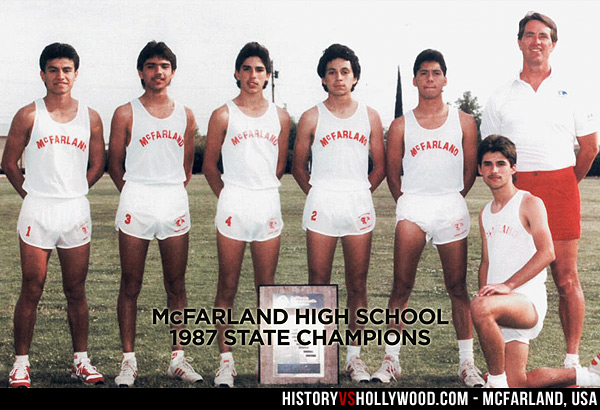
To celebrate turning in grades for me and finishing AP tests for my high schooler, we didn't do anything too fancy, since Dad was out of town, but we did take a break to sit on the couch and watch movies - actually the same movie two times. It's rare for me to watch a movie over again, but McFarland, USA, is just that good.  In fact, it may rank among my favorite movies of all time. We first watched it a few years ago not long after it came out on DVD (2015), but I don't see that I wrote about it. It follows the typical Cinderella sports formula - underdog surprises everyone - but knowing the plot doesn't take away from the emotional resonance of the film.  Perhaps I'm biased towards running movies, but this one presents not just a story of unexpected victory, but also of the importance of family and community bonds, of the value of hard work, of the universality of human dignity, and of the reality of sacrifice and redemption.

Based on the true story of Jim White, a high schooler biology teacher and football coach excellently portrayed by Kevin Costner, who has been fired from multiple schools for losing his temper with his students or players, McFarland, USA, recreates his first year at McFarland High School. Located in the California Central Valley, McFarland is home to California's almond orchards and other agricultural industries. It is not a wealthy or beautiful place, and White only moves his wife and two daughters there because he can't find any other jobs.

He begins the school year teaching life science and PE and coaching football, but conflict with the head football coach ends with White being removed from the coaching roster. As PE coach, he watches his students, mostly Hispanic kids who work on the farms before and after school, run and realizes they are gifted with endurance and speed. After reading in the news about the addition of Cross Country to the list of sports sponsored by the state's sports federation, he asks the principal if he can start a cross country team and apply for funds from the state to underwrite uniforms and coaching. He has to work hard to recruit a team of seven runners - the team leader he saves from suspension for fighting by getting him assigned to the cross country team and a set of three brothers are only allowed to run after he shows up to help them harvest cabbages and share a meal with their family. He reschedules the practice times around their picking schedule to please their tough love mother and foreman father.

Rated PG and produced by Disney, McFarland presents the challenges faced by the working poor Hispanic community and the racial tension between people of different colors in a way that is humanizing and empathetic. You don't have to love running or the sport of Cross Country to enjoy this movie and be touched by the relationships that grow and develop. It's a story about poverty and race, but the real heart of the story is the story of how the runners begin to believe in themselves after they have a little tiny success. Inspired, they put in more time and effort to their training, only to be victorious in their efforts.

Critics of this movie might point out that the ending is predictable, so I don't know that I have to announce spoilers, and viewers don't get a lot of insight into the minds of the runners - Costner's character is the focal point, although he is mostly defined by the way he interacts with others. Neither are the characters completely flat or predictable - for instance, one runner writes poetry that warms an English teacher's heart.  It might not show the really difficult side of being a farm worker, but it does open up the eyes of kids who will never have to work picking cabbages at age 10 to some of the difficulties of being a farm laborer.  It is made for a family audience after all, and other than a scene of suggested violence, it is suitable for the whole family. I admit I let the five-year-old watch it, even though it was probably thematically too mature for her. She's watched a few cross country races herself.

So if you do love Cross Country, this may become your most favorite movie ever, especially if you have watched your kids compete on the same courses, or if you have run across rocky fields from Mile 1 to get a glimpse of your team at mile 2 and then charged across a hile to see them run mile three, and then rushed to the finish line to watch them collapse in exhaustion. If you have watched or been a part of a team of good - but not necessarily great - runners who band together as a team and win competitions to advance to the state finals, even if the individual runners themselves would never win a race, you will love this movie.  Cross Country is a team sport, and even the anchor runner is an important asset, as Danny learns.  It's hard not to cheer at the end of the show.

Related image
https://disneynerds.com/2015/02/18/mcfarland-usa/mcfarland-3/

Read more about the true story of the McFarland HS team and the tragedy of two girl runners who were killed while practicing here: https://johnhartephoto.wordpress.com/2015/02/11/a-glimpse-at-the-real-mcfarland-usa-kids-and-coach-jim-white/

A Hollywood vs. History link about the differences between the true story and the movie: http://www.historyvshollywood.com/reelfaces/mcfarland-usa/

Some of my favorite cross country runners:
Image may contain: 11 people, outdoor and nature


Wednesday, May 31, 2017

Random Reviews and reflections

After my kids watched Moana three times in one week (we borrowed the dvd from the library), I was thrilled to read Melanie's analysis of the movie as a Pacific Island hero's journey, as well as her reflections on Moana's calling to be of service to her people and the subtle Christian imagery in the film.  It makes me feel less guilty about the media time. Now I just need to remember to sit down and talk to them to see if they noticed any of the details Melanie points out . . .

***************************
With our second oldest home recuperating from his first year of college before starting a full time job for eight weeks this summer, we've been watching a lot of movies.  He signed up for a free trial of Netflix.  I was the only one who stayed awake during the USS Indianapolis starring Nicholas Cage. Not my favorite actor but a powerful story.  While it is tragic that so many men lost their lives, it is incredible that so many of them survived four days in the shark-infested waters. It is a tragedy that the captain was persecuted as a scapegoat for a tragedy that was something of a triumph. It is also a tragedy that it took so many years for the story to come out, but it is also a triumph that it was a twelve year old boy who rediscovered the story while he was doing a project for the National History Project competition. See https://en.wikipedia.org/wiki/USS_Indianapolis_(CA-35)#McVay.27s_record_cleared

***************************
We also watched the first episode of Anne with an E. I've read the negative reviews and an interview with the writer/director, so I was curious about the series, and we sat down to watch it late one night this weekend after we watched Sully with the younger kids (a feel good hero's story, although the kids had trouble understanding why the Captain might be in trouble. In that regard it was similar to the USS Indianapolis movie).  I would like to describe how shocking Anne with an E was, but it is simply disappointing. Rather than feel shocked, I just felt bored.

First of all, the intro with odd ochre colored collage animations is just weird. I didn't get it. I couldn't really hear the lyrics of the intro song, but it was a contemporary singer-songwriter genre song - music that I generally like, but doesn't seem to fit the show.

I did like the actress and actor who play Marilla and Matthew.  The actress looks a lot like Colleen Dewhurst from the old version, but thinner and sharper featured. Both actresses play the role similarly, but if anything, this new actress seemed softer on Anne and seems to relent to liking her sooner than Dewhurst.  Another nice scene was Marilla helping Anne learn to pray, and Anne's enjoyment of it. She exclaims she likes the Lord's prayer, and while that delight may be in the flowery language, it is also clear that she has a grateful heart. So it is a positive depiction of a religious element.

Meanwhile, the actress who plays Anne seemed uneven to me. At one minute she was pensive and thoughtful, but the next she was pushy and rude.  When she was talking to Marilla about why she wouldn't apologize to Rachel Lynde, she seemed downright belligerent - more like a spoiled child, than one who has suffered as a serving girl and more immediately, who is in clear and present danger of losing her home and family.  Especially when combined with the scenes of harsh treatment, it is hard to believe that Anne would be belligerent about apologizing.  Megan Follows seemed more authentic, more a child of the period, than this actress, although her thin, homely appearance might suit the actual character better.

My final criticism would be the slow pacing.  Frequent shots of waves and fields seem poorly lit, like amateurish cinematography, although probably intentionally dim. Green Gables seems overly isolated.  The color and warmth of flowering spring trees aren't captured at all, and in fact, the flowers on the trees in the scene when Matthew and Anne first pass down the White Way look artificial.

Final verdict: disappointing and dull.  No sense getting upset about the few flashbacks to Anne's harsh treatment because they weren't as dark as I expected (maybe in future episodes?). And while the dialogue stayed somewhat true to the book, some of the detours - like Anne being on the train when Marilla loses then finds her brooch, are so major that I fear all of the delight has been taken from the original and replaced with nothing of substance.  It's been described as darker and more complex than the original. Darker, true; more complex - I don't think so.

***************************
What do you do when you read a book that is disappointing?  The one I just finished is repetitive and unsatisfying - too many fragments, too many uses of the rhetorical device when you repeat the beginning phrase like I'm doing here, and too little substance.  And This: Too. Many. Sentences. Punctuated. Like. This.  It read like a long blog post, which is not surprising since it is by a blogger.  There were many references to other blogs and blogging, which isn't necessarily a bad thing, but the book is certainly limited to a certain time and a certain type of reader.  Sometimes quotes were presented without an attribution.  And there were lots of generalizations without many specific examples. I haven't read enough good books this year.  Do I like bad fiction better than bad nonfiction? I think so.

****************************
The book I did finish that I did enjoy was Redeployment by Phil Klay. It was  and was not what I thought - a collection of stories about soldiers in Iraq with reflections about time and eternity - an opinion formed after reading a good interview with the author in Image magazine. It is a collection of short stories told from the perspective of different soldiers deployed to Iraq - a casualty officer, a chaplain, a hopeful contractor, a friend of a wounded warrior, a Marine sniper, a veteran going back to college.  Very moving, but hard to read because of the darkness.  Perhaps there is a note of hope, though often minimal, in the continued perseverance of many of the characters.  Harsh language.

******************************
Some belated notes on other earlier reads I liked:

Neil Gaiman's The View from the Cheap Seats: Selected Nonfiction  includes introductions, book reviews, prize speeches at conventions, an interview with Lou Reed, music reviews of his wife's concerts - Amanda Palmer of the Dresden Dolls, - weird acknowledgement of her relationship with her former partner, but perhaps healthy understanding and appreciation of her differences.

I don't love everything Neil Gaiman writes, but I'm glad he writes it. I'm glad he promotes fairy tales and graphic novels and science fiction as genres that should survive and thrive and sometimes be taken seriously by literary critics.  He creates imaginary worlds in his books that seem familiar because they are so closely related to the world of English Fairy Tales and Nordic tales and British Inklings' worlds. (see his essay "Once Upon a Time" about when fairy tales - Beowulf and The Odyssey and folk tales - were for adults)  He seems to be unusually open and accessible to his fans on his blog and Twitter, which I only know because I read something in the Guardian. He lives in a gothic house in Wisconsin, but also in Cambridge, MA, where he teaches at Bard College and sometimes in England.  Apparently, he is successful enough to have two homes.

His style is matter of fact, plain spoken, like having a conversation with a friend who wants you to like the things he likes. And some of the things he likes, I like or even love, and some things I don't think I'll ever read or enjoy, but I appreciate the reasons why he likes them.  For a while, I read the essays in order, and then I skipped around and read different categories I liked best, until I think I read most or all of them. He mentions in the introduction that he writes with his baby on his lap, who "makes me feel vulnerable: old fears, long forgotten, creep out from shadowy places."

 Some notes on essays: 
"Why our Future Depends on Libraries, Reading and Daydreaming: The Reading Agency Lecture, 2013" points out the connection between illiteracy and prison populations. "Literate people read fiction, and fiction has two uses. Firstly, it's a gateway drug to reading. ... And it forces you to learn new words, to think new thougths, to keep going. To discover that reading per se is pleasurable. Reading is for communication and buidling empathy, shows a different world,  an escape  "Information has value, and the right information has enourmous value" now we are in an informatino glut Libraries aregates to the future. An obligation to support libraries, to read aloud to our children, to use the language, "to write true things" writers must write tales that readers can't stop reading, ... to daydream. . . . to imagine

"Telling Lies for a Living ... and Why We Do It"  is his Newbery medal speech 2009. He claims he doesn't write stories for people to get through hard times (having received thanks for this) but because the story wants to get out,. but he does remember that "Sometimes fiction is a way of coping with the poison of the world in a way that lets us survive it."  
"It's not irrelevant, those moments of connection, those places where fiction saves your life. It's the most important thing there is."
 "Reading is important,. Books are improtant. Librarians are important. (Also, libraries are not child-care facilities, but sometimes feral children raise themselves among the stacks.) It is a glorious and unlikely thing to be cool to your children. Children's ficiton is the most important fiction of all. ...We who make stories know that we tell lies for a living. But they are good lies that say true things, and we owe it to our readers to build them as best we can. Because somewhere out there is someone who needs that story. Someone who will grow up with a different landscape, who without that story will be a different personl And who with that story may have hope, or wisdom, or kndness, or comfort.
And that is why we write.""

His graduation speech, "Make Good Art," can be seen on Youtube, there's a video of this speech at University of the Arts in Philadelphia in 2012. He never graduated from an institute of higher learning, yet it is one of the most widely distributed of his videos.  He says, "Life is sometimes hard. Things go wrong, in life and in love and in business and in friendship and in health and in all the other ways htat life can go wrong. And when things get tough, this is what you should do.
Make good art."

Essays that made me want to learn more: "On Richard Dadd's The Fairy-Feller's Master-Stroke." a picture in the Tate Gallery's Pre-Raphaelite collection. Also inspired Angela Carter in a radio play and Christina Rossetti
Lud-in the Mist by Hope Mirrlees - an introduction and Lord Dunsany's The King of Elfland's Daughter.

I am not so much into sci-fi, but Gaiman provoked my interest in Terry Pratchett, Sandman, and Diana Wynne Jones. I too loved Dr. Strange and Mr. Norrell. The 13 Clocks by James Thurber is one I should have read. I've never read Douglas Adams Hitchhiker's Guide to the Galaxy, which seems to me to be a shortcoming in cultural literacy. He mentions loving Narnia, Tolkein, and Father Brown as a child, and Rudyard Kipling, who now is excoriated as a fascist and a racist. He also quotes Stephen King: "Trust the tale, not the teller." Interview with Stephen King was good. So was the article on"What the [Very Bad Swearword] IS a Children's Book, Anyway?" 

He comments that authors are bad at answering questions because they give too many answers. Kids learn that words have power from swear words. They want to know about adult behavior, but they censor adult books themselves because they are boring. Coraline is only a children's book because his friend's daughter lied and said she wasn't scared of it, when she was terrified but wanted to hear the end. Adult books have the boring parts left in, a world comprehensible only to adults. Now I also want to read The Ocean at the End of the Lane.

The title essay, "The View from the Cheap Seats," was written after the 2010 Oscars - Coraline was nominated as best animated film - lost to Up.

The collection closes with death, with an homage to Terry Pratchett - after essays about his wife, Amanda Palmer, and his very good friend's death, and a trip to Syria, which touches on the suffering outside of the imagination.

*****
I love it when one of my kids introduces me to a book that I love. Coraline was one of these books, as is Mighty Jack, the new graphic novel from Ben Hatke.

I already knew Ben Hatke had a new book out. When Dan was in grad school, we went to church and were friends with his family.  One of his younger sister's hosted a prayer group/play group at her house. His other little sister used to be our babysitter and we still love her album of songs she played at coffee houses. And ew spent a couple days at his parents' river house shortly before we left the area after graduation. We have the prolife book the Angel in the Water and the Zita books, and the charming Julia's House for Strange Creatures.

Now my son comes home from the school library with Mighty Jack which is a fun retelling of the Jack and the Beanstalk story. It has as a main character a home schooled girl who fights with swords forged by her older brothers and carnivorous plants. 

We can't wait for the next installment!
*****

Thursday, April 27, 2017

At the movies - in the living room

This past weekend was a recovery weekend. We didn't have much on the calendar, so we caught up on some chores, on planning, on watching movies with the kids. We watched four, yes, four, movies over about 6 days - Thursday to Sunday. And guess what, they were all good.  Moana is now out on video at the library, and the toddler and I hadn't seen it, so we checked it out and watched it more than once.  My husband loves this movie.  It brings back visions of Guam and our happy life there.  The dumb rooster and the roaming pig are details that seem especially apropos.  And the music is good.  

After watching it, the toddler has mentioned more than once that she wants a grandma.  She knows she has two that live far away, but she said she wants to borrow one. She also wants a baby, a dog, and a cat.  I am thinking we need to go to the nursing home and make a friend.  And a part of me still wonders if we should do something like foster care or respite care.   Right now life is still busy, but next year another chick flies the nest.  Just having two gone makes the house seem quieter; with three in college, it might seem positively silent around here.

Finding movies to watch with the 10-17 age group can be difficult, but the three we watched were the right kind of movies to watch with big kids: serious themes, but limited sex and violence.  42, the Jackie Robinson story, had terrible language that earned it a PG-13 rating, but the language came out of the mouth of a reprehensible character and added to the development of the story of Robinson's strength of character, so it didn't feel gratuitous.  Even though he was taunted and belittled by both his own team at first, and competitors, he fought down the urge to fight back, but chose the road of nonviolent, gentlemanly behavior.  This caused his team to rally behind him and created unity on the team.  The movie made the racism of the past real to the kids, and the movie depicts Robinson's strong marriage to his wife and his dedication to the game in ways that are admirable, like the characters in Hidden Figures.

The next movie, Lion, was a bit darker, and I missed part of it because I put the toddler and the 10 year old to bed. Lion is the story of a young Indian boy who falls asleep on a train and can't find his way back to his family.  This movie had a darker side, but again it is a story of persistence and of the strength of family connections. It raises the question of international adoption. Is the child better off in a more prosperous family far from his homeland with more opportunities for education and advancement, or should more of an effort have been made to find his family? The movie focuses on his internal struggle with his identity and the unreliability of memory more than this issue, but I was left wondering.  Surely in a quantitative way, Saroo has had more advantages after being adopted. But he still longs to know his roots, and the final scene of reunion is incredibly moving (I don't think that is a spoiler because viewers must assume it happens; otherwise, the story isn't as compelling).

Paterson was my favorite of these three adult movies that are suitable for teens.  This one we watched only with the two older kids, and the 14 year old went to bed because she was bored by it. It's rated R, but I'm not sure why, other than a few bad words.  The 17 year old's assessment was, "weird but funny." This movie about a bus driver/poet named Paterson who lives in Paterson, New Jersey, has received much more glowing reviews from some critics, and I loved it.  Paterson is played by Adam Driver, recently Kylo Ren and the second priest in Silence.  He has an odd look, perfect for his character, who is an unassuming bus driver living a routine life. The drama of the movie is minimal.  Viewers watch Paterson rise, go to work, and write a poem in his secret notebook on his bus before driving off on his route. Each day he overhears snatches of mundane conversations, mostly good humored. He seems to enjoy his view of the streets.  Occasionally he meets other poets, like a guy rapping at the laundromat about Paul Lawrence Dunbar or a young girl who shares a poem she wrote in her own secret notebook. Her poem actually is more beautiful than Paterson's poetry, which appears on the screen as he writes.  His poetry is very object oriented, like his favorite author's, William Carlos Williams, who is also from Paterson, New Jersey. (The poems at first seem intentionally adolescent. I discovered they were written by Ron Padgett, some for the film. Although they start with commonplace observations, they often end with a twist or with a remark that functions as an ode to the beauty in the thing.) Each afternoon Paterson comes home to eat odd dinners crafted by his beautiful, creative girlfriend (I'm assuming because they don't wear rings). She redecorates every day while he is gone by painting curtains and walls in different patterns of black and white. One day she orders a black and white guitar in hopes of becoming a famous country singer, and another day she decorates cupcakes in black and white to sell at the farmers' market in hopes of starting a cupcake business. She encourages Paterson to share his poetry and to make a copy of his secret notebook. Every evening Paterson walks their expressive bulldog a few blocks to the local bar, where the bartender posts newspaper clippings and photos of famous residents of Paterson, but he refuses to have a TV.  Here, too, Paterson sits and engages in conversations or eavesdrops on other people's conversations before returning home.

The drama of the movie happens in these conversations. Occasionally a sense of tension emerges in the relationship between Paterson and his girlfriend because he hesitates to eat her brussel sprout pie, or because she ordered a rather expensive guitar, but it is minimal and graciously resolved.  They seem to encourage each other in their creative pursuits without envy or resentment.  Both of them thrive in their small ways of expressing their rich inner lives.  They notice beautiful things and take pleasure in the witnessing.  The small drama that occurs at the end is resolved in a fortuitous encounter that again reaffirms Paterson's observation that poets are everywhere, that the world is full of poetry, and that the ability to notice beauty and be inspired by it is universal. The beauty of the film is that Paterson doesn't say any of this; he doesn't preach.  Filmmaker Jim Jarmusch  has created a small film that documents the objects and interactions of everyday life and creates "a thing of beauty that is a joy forever."  In this he perfectly captures William Carlos Williams' idea that there is "no ideas but in things," a line I had heard but didn't remember the source. Of course, it is from his long poem "Paterson." (Incidentally, in looking up that line, I found that Williams was also inspired by Keats.) It's all connected. 

Tuesday, February 14, 2017

At the cinema

The Oscars are coming up pretty soon, and while I don't plan to watch, we have actually seen more recent movies this year than in the past. This viewing trend began over Christmas vacation with Hacksaw Ridge and Silence and is now slowing down, but the past two weekends in a row we went to the base theater to watch movies that were very different in subject and style but had a similar feel.

First we saw La La Land. Actually, I went with just my 14 year old daughter and her friend, which is a different experience than going to the movies with my husband and the whole crew.  It was opening night for this show at the base, but we were some of the younger people at the theater. I've never seen so many white heads at a show there. The base theaters tend to show a lot of action flicks and dumb comedies to appeal to their primary audience, young sailors. So this musical romance attracted a different crowd.  This phenomenon interested me; I wonder how the word got out.

I can see why this movie appealed to an older generation, on that grew up with shows that featured music and dancing.  Someone told me that the movie was refreshingly clean, but I was still a little on guard for anything inappropriate.  There might have been a few bad words, but from the very opening, the ensemble song and dance routine on the jammed up LA highway, I was charmed.

And the movie continues to be charming.  The cinematography is color-drenched during the happy parts, the dance numbers are fun; the songs are sweet; the dresses are pretty. Although neither of the stars, Ryan Gosling nor Emma Stone, are strong vocalists, they are good dancers together. The scenes featuring Griffith Park and all the Priuses on the LA roadways are familiar. The movie feels like it could have been made 50 years ago - hence, the age of the crowd? - but it also has an immediacy that makes you feel like not everyone in Hollywood is involved in conspiracies and murder mysteries.

The movie is much fresher and cleaner than most movies rated PG-13, although there are some bad words, and about halfway through the movie, the two stars, who have fallen in love, move in with each other. (No heavy love scenes, fortunately) After their initial romance, which is all bright colors and bright songs, the movie takes on a more muted tone, a minor key.  Both Gosling and Stone, as Seb and Mia, are dream chasers: he wants to be a jazz musician and she wants to be an actress. Seb's apartment is bland and poor looking; Mia lives with friends in a cute, colorful, feminine apartment. Both are struggling when they meet, but Seb finds success - big success - with a former high school friend who has a jazz band that plays contemporary jazz.  Their group tours and sells albums and has a fan base. However, Seb isn't playing the kind of music he wants to play. Meanwhile, Mia has a spectacular failure in her self-authored one-woman show, which she pens after failing audition after audition.

In between Seb's success and Mia's failure, their romance falters. Mia questions Seb's integrity as a musician, and Seb questions Mia's idealism.  They accuse each other of jealousy of their success or passion for their dreams.  In tears, Mia runs away home to start over again and mourn her broken dreams. Seb pursues her when he answers a call from a producer interested in Mia's writing.

SPOILER ALERT:

The two briefly reunite, and Seb apparently leaves the band. But their relationship is still doomed: Mia's new writing gig requires her to go to Paris. In a touching scene back at the Griffith Observatory, they split apart to pursue their dreams.

The ending challenges what has so far been a predictable movie.  Flash forward five years: Mia is a big success; she is married to a guy who looks like the guy she broke up with to be with Seb initially, and they have a toddler. She and her husband head out to an event, get jammed up in LA traffic, and stop at what turns out to be Seb's successful jazz club. Seb and Mia lock eyes, and he begins to play their theme song, while a dreamlike sequence of what might have been plays for the audience. For a minute, the audience wonders, Is it a return to the beginning? Is Mia going to leave her husband and child? But as she leaves with her husband, she and Seb share a secret smile exchange that seems to say "Congratulations and goodbye."

So the ending is a big let down and feels a little unbelievable.   If it had been 10 years later, or if Mia were only on a date and ran into Seb, it might feel more natural. Five years isn't very long to get over a romance that seems to be the real thing, then become a big success, get married and have a small child.  They didn't write or call each other? Social media? Mia never knew Seb finally gets his club?

Regardless of the timing, the ending raises a few questions: Do the two have to sacrifice their relationship to realize their dreams?  Is the conclusion saying that two dreamers can't live together?  I felt that there was a subtext that Mia was more heroic in a way than Seb because he had some dumb lines, but I'm not sure that this is fair. While he may seem stubborn and convinced of his own talent and vision, he apparently does have talent. Meanwhile, Mia's acting ability is dubious. But apparently her storytelling is better because she makes it as a writer, although how many writers have their pictures on a billboard, as she does? And the story she tells to the producer in her audition for the writing job, seems a little weak - maybe because she sings it.

Is the ending a critique of dreamers - showing them to be selfish? - or a celebration of the dedication that it takes to realize a dream?  Were Seb and Mia jealous of each other, or too dedicated to their own dreams to help the other make it?  Is their love not the picture perfect relationship it seems to be at first? Is their art more valuable than their relationship? Perhaps it depends on where you stand on the platitude urging to Pursue Your Dreams Whatever the Cost.

I halfway believe that truly genius artists are somewhat doomed to be loners - because they have to be wed to their genius, like a contemplative religious. Perhaps because - true or not - artists often seem to be mentally unbalanced in a way, either manic-depressive or monomaniacal or something that gives them a different vision of the world. But in La La Land, the characters don't seem mentally unbalanced at all.  In order to realize their dreams, they can't give their relationship the energy it needs to survive, although they can invest in other relationships. (How Mia manages a handsome, seemingly successful husband, a toddler, and a pretty house in addition to writing is the happy fiction. I was glad that she walked away with her husband and didn't run up to Seb.)

So final assessment, I'm glad I saw La La Land because of the pleasure it brings in the first hour and a half, overlooking the shack up. It's fun entertainment.  I really, really enjoyed watching it. I'd see it again.  But since I'm still puzzling about the ending, I'm not running out and telling everyone to go see it.

*****

Because of this slight disappointment, when we walked into the theater to watch another highly recommended film, Hidden Figures, I was afraid of losing my enthusiasm.  This is the story of the three black women who work as calculators for NASA at Langley Field during the early 60's as the space program is building up. This movie I give an unqualified two thumbs up, even though there were several points where the plot could have become troubled. Surprise! No dark turns, no over-dramatization of failure and corruption. The characters face challenges, but they succeed!  Go see this movie, and take the family!

Based on a true story, the characters are bright and motivated students and conscientious employees in a white male dominated business. The three main characters are working moms - all three have young children at home. And their homes seem happy. Two are married, but the main character, Katherine Johnson, is a widow.  She meets a man at a church picnic, and I kept fearing that he would turn unfaithful or something negative would happen, but their relationship develops positively, and he proposes marriage to her and her three girls. Happily, the notes at the end of the movie report their marriage lasted 56 years until their deaths.

In addition to highlighting the challenges that these three women faced during segregation, the movie also alludes to the advancements in technology occuring so rapidly at this time.  While Katherine is involved in calculating landing locations for the first manned space flight, and her friend Mary Jackson studies to become NASA's first black female engineer (even though she is already doing the job), the third character, Dorothy Vaughan, works her way to becoming NASA's first black female supervisor, moving up from unofficially overseeing the black female computers, to overseeing a whole department of computer programmers, because she realizes the future will be about adapting to the changes the come with the enormous IBM computer - the giant, room-sized version of the machine. This machine presents Dorothy with the challenge of potentially becoming outdated and out of a job.  So while Katherine proves her worth by catching other people's - and the machine's mistakes - and by seeing alternative explanations, and Mary goes before a judge to petition to go to graduate school at an all white male night school program so she can become an engineer, Dorothy goes to the library, learns Fortran and how to program the IBM, and then teaches it to all the women in her department.

This movie also harkens back to an earlier time that seem full of possibility.  It seems like a fairy tale that all three of these women succeed.  Mary goes on to be NASA's first African American woman engineer, Katherine continues to work there as a strategist, and Dorothy teaches the white women how to program. They all had long successful careers at NASA for decades.

These women achieved great success by working hard, looking forward, and maintaining their dignity.  I haven't seen a movie this uplifting in a long time.

I read an article not that long ago about how these movies that are filled with nostalgia for a better time are a part of the political desire to return to this era of technicolor possibilities.  I can't remember where the article was, and I don't have time to look it up, but I'm not sure I entirely agree with the premise.  It's not unique to today to look backward warmly.  And it is worthwhile as well as wholeheartedly entertaining to revisit success stories of heroes like these previously hidden women of NASA, and to celebrate arts like ballroom dancing and jazz that are often overshadowed by more lucrative performances.

Wednesday, January 18, 2017

On Silence, the movie

It has been several years since I read Shusako Endo's book, but I was very excited to see Martin Scorsese's film adaptation of Silence.  Last night we coughed up the money to go to a real theater instead of waiting for the DVD, like usual. (I don't think the movie will come to the base theater, where the kids see a lot of movies for free. I usually stay at home with the baby during these outings.)

According to my albeit faulty memory, the movie seems to be very faithful to the book. It is very long and very slow and somewhat dark. The book seemed to move at a faster pace to me, but perhaps not.

The story, for those who haven't read reviews, is of two young Jesuits who go to seek their teacher and role model who is rumored to have apostatized under pressure from Japanese rulers who are torturing Christians and outlawing foreigners and their influence in 16th -17th century, at the height of missionary zeal. Francis Xavier had baptized thousands. Now thousands have been martyred.

The two, Rodrigues played by Andrew Garfield from Hacksaw Ridge, and Garupe, Adam Driver better known as Kylo Ren from Star Wars, cannot believe their favorite priest. Fr. Ferreira, has apostatized (played by Liam Neeson). They risk their own lives to sneak into the country after they hire a drunk Japanese man named Kichijiro to lead them. He is almost incapacitated when they first meet him, and he claims not to be a Christian, but he leads them to a Christian community in Japan. The leaders of this community hide the priests and bring Christians to them. They tell that Kichijiro is a Christian who apostatized. Eventually he pleads for confession.  They visit another community and finally are discovered. Their community of believers is threatened and the three leaders are killed by being crucified on the shore line and drowned by the tide. The creativity of the means of torture surprised me when I read the book.

The priests are separated and individually tortured. We see Garupe die trying to save some Christians. He had been told that Rodrigues apostatized.  Rodrigues is forced to watch Japanese Christians being tortured, and he admires them for their faith while praying for strength. He again gives Kichijiro absolution after he betrays Christ again.

Finally, the Japanese captors confront Rodrigues with his mentor, who explains his loss of faith and apostasy. Ferreira has been mentally and physically beaten and tells himself that the faith of the Japanese Christians is a faith in a false god.  Rodriques is broken as much by this encounter as he has been by the physical and mental torture.  As he listens to the groans of five more Christians being suspended head down into cesspits, he finally agrees to renounce his faith. During all this time, God has kept silent. Just as Rodrigues is about to step on an icon of Christ in an act of apostasy, he hears the voice of Christ encouraging him to step. This is what I came for, Christ seems to say - to be reviled and beaten.

In denying his faith Rodrigues is finally humbled, finally hears Christ. He becomes like the Christian he despised, Kichijiro.  An apostate and no hero for the faith. He cannot die in glory.  Instead he spends the rest of his life in Japan. Given a wife. Forced to identify any Christian symbols on imported goods.  He is completely broken.

And yet, this is his triumph. This suffering is what he needs to take away his pride and self-righteousness.  Is he Christlike in his littleness? Perhaps not. But he knows he is in need of salvation. He is humbled by his failure to be strong, to withstand torture and despair.

The one thing the movie does that I don't remember from the book, which I thought ended more ambiguously, is that it shows his body being burned in a Buddhist ceremony. His wife has placed in his casket a tiny crucifix, placed between his hands.  The film thus confirms that he did not let go of his desire for Christ, even though he was silent for all those years.

The movie leaves the audience silent as well.  I have some reservations about how this film might be received. I wish it success, but also suspect some viewers have a different view of the ending. Perhaps it is a story of Rodrigues's weakness and the inability of Christianity to sustain believers confronted by the cruelty encountered in the world, especially when it is accompanied by such beauty as exists in Japan. And in a culture hypersensitive to racial insensitivity, the archaic references to the Japanese by the Portuguese Jesuits may turn hearts to stone. And the movie as a movie has some weaknesses. The accents of Driver and Garfield sound forced at the beginning.  The cinematography doesn't capture the beauty of Japan, but has a narrow focus on the huts and foggy coasts where the Christians hide.  The pacing, as I mentioned, is slow. It is a thoughtful movie, perhaps even prayerful. As a Christian viewer, you ache for the persecuted Christians; you hope for them to be strong, to not recant, but like Rodrigues, you don't want them to suffer for their fidelity.

The movie also holds up a mirror. Would I be so faithful? Stepping on an image seems like an easy thing to do if it meant that my life and those of my family and friends would be spared. The image is not God. But the incarnational aspect of our faith accepts that images and devotionals can be sacramentals, vehicles of grace, so perhaps they can also be vehicles of betrayal, damnation. Is the voice that speaks at last really the voice of God or what Rodrigues hopes to hear?  The movie seems to suggest it is Christ, and that Christ knows our innermost hearts and accepts His rejection.  How can the priest believe he is more faithful than even Peter who denies Christ in the flesh? God knows our hearts, knows if we were to deny our faith in order to save our lives and our families. And He also must know when we are too weak to be asked to be strong - like Peter, like Kichijiro.  Kichijiro knows he is weak, a sinner, a bad Christian. Why does he keep coming back to the priests? Why does Rodrigues keep the little missionary cross, the tiny reminder of his failure to love the God he turned his back on? Because it is our failures that lead us to the Cross. . .

Tuesday, February 18, 2014

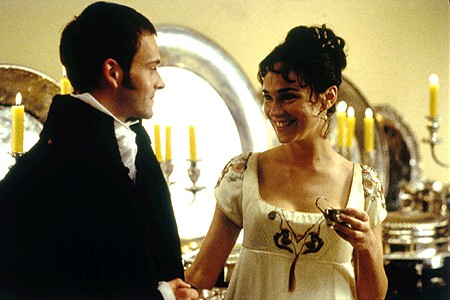
Prescription: Jane Austen

Perhaps all the world needs to be a brighter place is an injunction to read Jane Austen once a year or so.  Ah, pastoral escapism at its finest!  I just finished  Mansfield Park, and life feels much lighter and more satisfactory.  I spent several days ignoring the news and current events and everyone else's crises, and now feel refreshed and certain that despite the conniving of shallow people, sometimes the right people end up together.

To be honest, I don't think I've ever read the whole of this novel before, although I thought at first I was rereading. I remember reading part of it years ago - high school, college? - and not finishing.  Then I watched the movie that came out in 1999 directed by Patricia Rozema. Mistake. This movie is takes egregious liberties with the original work, and gave me a mistaken impression. I should have known the film was derivative, but in my mind I had this feeling that Mansfield Park was the "dark" Jane Austen.  The characters may not be as engaging as the Bennets and the Dashwoods, and the plot a little thinner, but I'm glad I finally read it instead of thinking I knew the story from the film.  It pays to read first, watch second. I kept waiting for the dark secrets suggested in the movie to come to light in the book. Of course, they never appeared.

So why do filmmakers feel it necessary to add drama and darkness to a book that is enjoyable enough without the suggestion of perversity?  Would modern audiences really be bored with the story the way Austen tells it?

Surely the scriptwriters are mistaken that audiences want darkness. Judging by what I've read in response to some of the events on Downton Abbey, viewers would be happier if the scandals and surprises were toned down. The acting, dialogue, and cinematography are gripping enough without the writers needing to go to great lengths to keep the viewers in emotional turmoil. In fact, I haven't been watching because I read some spoilers and didn't want to be strung along for weeks waiting for resolutions.  I'd be a bigger fan of Downton if the writers DIDN'T sensationalize the script.

Likewise, Austen's book needs very little drama to be intensely readable.  Her characters and dialogue are interesting enough without excessive plotting.  There's drama in reading about Fanny Price's emotional maturing.  The suspense of wondering whether Edmund Bertram will have his eyes opened or whether Henry Crawford truly has turned a corner keeps you page turning.  Austen adds more suspense by developing her characters enough to keep you wondering whether Fanny's judgment regarding Mary Crawford's shallowness and Henry's flirtatious nature is just.  Their character flaws are masked by attractive characteristics: they're entertaining, they show compassion, they seem to do the right thing most of the time, they bring a spark of life to the party - all the things that make them easy to love, especially when countered with the sometimes dull life of the estate. It's just that every once in a while they reveal a shallowness and selfishness that will probably grow over time instead of lessen. Austen had me wondering if Fanny's goodness could make Henry into a good person, even though I knew the end of the story - would he really give up his careless flirtations if he were wed to just the right person?

Meanwhile in the movie, the characters experience little interior change.  Drama is provided by Sir Thomas' involvement in the slave trade and the suggestion that he behaved criminally to his chattel.  Where Austen suggests immoral behavior on the part of Maria Bertram and Henry, the movie shows it.  Fanny is more independent and energetic in the film than in the book. (Perhaps one change that I don't disagree with - Fanny in the book is extremely shy and unhealthy in the beginning. Does she not translate to the screen well as a heroine because she is too good?)  And the filmmakers exaggerate all the flaws of the Bertram women to make them less likable - which highlights Fanny's attractiveness. Lady Bertram appears as a drug addict. The sisters are hateful to Fanny. Tom, the older brother, is a gambler and spendthrift. And you can see Maria and Henry plotting. It's almost too obvious what will happen.  But I have to admit, the movie is easy to watch - great acting, beautiful scenery and costumes, good chemistry. It's just not Jane Austen's book.

Thursday, January 3, 2013

Yet another Hobbit review for Tolkien's birthday

I have been reading The Hobbit with my 8 year old for over a month now (with interruptions), and will have to read an extra chapter tonight in honor of the Professor.

So I know almost everyone has seen the movie version of The Hobbit by now. But since in the Western Hemisphere it is still J. R. R. Tolkien's birthday, I thought I'd post this review I wrote and never finished.

I took the older boys to see The Hobbit with their “Catholic Youth Group” friends. They’ve figured out that if they say the youth group is doing something then I’ll say yes much easier than if they say they are want to go to the movies with “friends.” I had promised we’d go to see the midnight premier, and they were planning to go in costume. One of the boys was Gandalf the White a couple years ago for Halloween and the hat and sheet are still around. Another was going to take his bow and be Legolas. And the youngest was going to glue fur to his feet and be a hobbit. BUT the premiere here was a Thursday night, and I couldn’t reconcile myself to staying up until 2 am and then getting them up for school at 6, so we went Friday night. Since it turns out that GIRLS were going with the group – in our car, even - only the 12 year old ended up wearing hobbit fur. He relishes being the object of hilarity and had a great time playing annoying little brother in the back seat.

The kids loved the film, and I enjoyed it, but I have to admit I was a little disappointed in it.  I didn’t know it was going to be 3 parts until the week before, which I feel is blatant money grubbing, not an attempt to make a faithful interpretation of the book. Since I’ve been reading the book, I was fresh up on the text, and I have to say that Peter Jackson takes a number of liberties, so fidelity to the text is not the motivating factor for making a trilogy. 

In order to make the movie long enough, a lot of battle scenes and background storylines were added. My oldest seemed to think it was great that some of the background mythology was included, but I wondered how much of it is true to Tolkien's vision. First, all these orcs are running around riding the wargs and hunting the dwarves from the beginning. I guess they are supposed to add suspense and special effects wonderment.

Then there’s the addition of the Pale Orc story.  I had just read the one mention of the Pale Orc in The Hobbit, but I wondered if maybe the legend came from one of the background texts. Mr. Darwin points out the source on his post, so it is quite elaborated by the filmmakers. A problem I see with it, is that is seems to humanize the orc by giving him a motive for revenge. Then again, he is seemingly indestructible.

Another addition: Radagast, the brown wizard very briefly mentioned by Gandalf in the book, and his cute animal friends. I believe he must have been added to charm the young ladies who come to the movie and need something lovable to oh and ah over.  His rabbit sled bordered on ridiculous, but my daughter loved that part.

The scene with Gandalf and Galadriel seems a needless moment  - the quote about "small acts of kindness of love" being the only thing that can defeat great evil  makes Gandalf seem like the author of one of those little gift books you get for graduation.

And finally, the worst offense is the addition of the scene where Bilbo rescues Thorin from the orcs after they’ve escaped the goblins and are stuck in the pine tree.  Giving Bilbo this heroic moment in order to win Thorin’s admiration seems totally out of character.  Bilbo survives by being clever, not dashing. With the addition of some syrupy platitudes along the way, I was starting to get annoyed with the whole thing. It was exciting, but I nearly got a headache from all the twists and turns, although the dizziness of the movie may also be due to its high definition filming.   I was ready to go at the end, not reluctant to leave my seat.

The 8 year old didn’t get to go, because he hasn’t finished the book, so his dad will take him when we're done reading, but I’m wondering if the movie won’t be too intense. It almost seems more threatening than The Lord of the Rings – yet another change from the book. The Hobbit has a more humorous tone - Tolkien often prevents suspense by telling that Bilbo DID rescue the dwarves before he actually does, as in the scene when they are all imprisoned by the wood elves.  The movie is breathtaking and gripping, but the narrative voice of the book has a warmth that's missing in the movie.

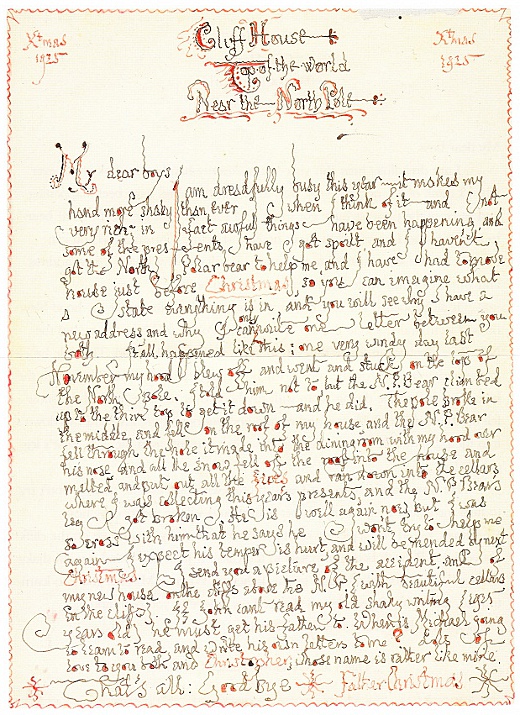
It is present, however, in this letter from Fr. Christmas, reprinted at Letters of Note:


Monday, March 28, 2011

Glowing endorsement for a don't miss film

My husband and I watched the most beautiful movie last night – Departures. I’m going to admit my lack of cultural awareness when I say I had never heard of it, even though it won the Academy award for best foreign language film last year. I picked it up at the library last week because it was made in Japan, little knowing that it would prove to be such a moving story about treating the dead with grace and dignity.


Departures, or “Okuribito” in Japanese, tells the story of a young Japanese cellist, Daigo, whose orchestra is disbanded. Out of work, he and his wife move back to the northern town where he grew up. His mother has died and left him a house; his father abandoned them when he was a small boy. Daigo finds an advertisement in the want ads for a worker in “departures.” He applies without realizing that he is going to be working for a type of undertaker, or “nokanshi,” preparing dead bodies for burial.

Of course it turns out that the old undertaker who hires Daigo is an intuitive man with a great respect for the dead and their families, and a great zeal for life, or at least for food. The film moves from Daigo’s initial disgust for the job to his understanding of its importance and his appreciation for the artistry with which his mentor works.

Not only does the movie provide a thoughtful meditation on corporal mercies, but it also offers great reflections on marriage and relationships between parents and children. In the rituals of death, all the vulnerabilities of life are revealed.

It is impossible to watch this film without wondering if the setting, an idyllic village far from Tokyo in both distance and convention, was destroyed by the tsunami. As far as I can tell from some quick internet searches, the filming location was mostly in Sakata, which is on the coast opposite of Sendai, where the airport was underwater. The film makes you realize what a horror it must be for a culture with such a beautiful casketting ceremony to bury thousands of bodies in mass graves without this reverent preparation for life after death.

I can’t recommend this movie highly enough.

 A beautiful evocation of “Remember you are dust and unto dust you shall return.”

Thursday, January 27, 2011

The Human Experience

With all the recent sorrows, it was the right time to watch The Human Experience. My cousin recommended this movie made by a few young men who lived for awhile at the St. Francis House run by the Franciscan Friars of the Renewal. And it is a movie worth watching, especially young people. If it seems a little amateurish, it makes up for that with earnestness and sincerity.

The film features two brothers in their early 20s, Jeffrey and Cliff Azize, who set out on a journey to discover what three different lifestyles (the human experiences of the title) can teach them about what makes life worth living. How do people keep living when life seems hopelesss?

Their first experience is spending a week of winter with the homeless of New York. They slept in cardboard boxes and begged food. They interviewed several homeless people and talked with a few volunteers at a soup kitchen. The interviews were some of the richest of the film. One woman told the story of how on one of her first nights on the street, she observed a New Yorker come across 4 homeless dogs. He got on his cell phone immediately to find them shelter, and other people stopped and offered to take a dog or help find them homes. But no one noticed her.

Another homeless guy made the poignant remark that he knew God had a purpose for him, even if that purpose was to make other people take notice and be charitable.

The next stop for the brothers was an orphanage for abandoned and disabled kids in Peru. This segment had lots of heartwarming footage of the orphans going to therapy along with some clips of interviews the brothers conducted with life “experts” – Fr. Richard John Neuhaus before his death, an activist, a neurosurgeon, an artist, an actor, a rabbi, Dr. Alveda King, et al, - who reflected on suffering and finding meaning in life. These clips were interesting, but one criticism my husband and I both had was that too often the film allowed aphorisms from these interviews to take the place of showing the people suffering finding consolation or simply living. We both felt that less talk and more show would’ve made the movie better. But on the other hand, the audience the show is geared toward is sometimes motivated by short powerful mottoes.

The third experience was visiting Ghana to witness people with AIDS and leprosy continue to find a will to live even in the midst of poverty and illness. One of the best anecdotes from this segment was the story told by one of the sufferers with AIDS about how the community looked out the young kids whose parents died: the community gave them a new father and a new mother. No one stayed an orphan, no matter how old they were.

I hope the kids found something to reflect upon. I know I was struck yet again with the awareness of how much we have. And of how tightly I hold on to things I “might” need. How many times have I packed up clothes to hand down to a sibling, only to find they don’t fit the next child or have lost their elasticity? I should have been more generous about passing those things on to someone else. But more than I need to be generous with things, I need to be generous with gratitude. I need to remember to offer thanks verbally more often, and reflect on my face, not anxiety, but cheerfulness. I know where my next meal is coming from, I’ve got a warm bed, I’m as healthy as a middle aged horse. But too often I don’t let those comforts bring me peace.


We also watched Romance Without Regrets recently with the older boys – I want to giggle like a preteen when I say this. Actually I only watched the end because I put the youngers to bed. But I could hear the boys laughing so something Jason Everts said resonated. I think it also provided a hopeful message about the power of love.
Reading is one form of escape. Running for your life is another.
-Lemony Snicket