Monday, October 26, 2015

An apologia for keeping books

Enjoyed this article about keeping books in the Autumn Notre Dame Magazine.  I'll latch on to any excuse, but Kerry Temple makes a great argument for books as friends and companions. They bring comfort just by being in the room, reminding you of what they contain and the feelings they evoked. My ongoing struggle with limiting the number of books in the house is mostly controlled by refusing to buy new books.  Temple's comments on books as friends, and the difficulty of friendship with an ebook, along with his reflection that perhaps books are sacred objects, lessens the inner conflict about holding onto books. Those ideas also lead me to wonder if whether part of the loneliness and isolation that teens - and others - often feel isn't because they are comparing their life to someone else's or feeling left out of something fun while reading Facebook or Snapchat or whatever, but because they don't have any books for friends. I know I'm not the only one who carries a book around as a security object - not only does it give you something to do if you are stuck waiting, but it also is like holding the author's hand, a confidence boost. 

Are there any therapies that prescribe reading physical books as a cure for loneliness and isolation?

My favorite excerpts from the article: 


I have a friend who is much more comfortable with the thought of dying than I am. A few years older, he cares for the elderly, stands watch with them, then ushers them through that eerie portal. He told me recently that death will be a buoyant moment because “all your spiritual guides will be there to welcome you into their company.”
“I know so,” he said, nodding, smiling and saying yes, even when I asked about a writer or two I knew only through books I had read.“You really think so?” I asked, incredulous.
The thought that Steinbeck and Merton, Kazantzakis, Twain and Flannery O’Connor would greet me in the Great Beyond made that dreaded moment — and the unnerving strangeness of eternity — a bit more palatable. It was comforting to think that those whom I had read as pilots and pathfinders to help me navigate the human condition would be on hand as personal escorts into the afterlife. Rascally adventure guides.
....
I had a recent conversation with a retiring law professor who was not only moving out of his office but also leaving his home for an apartment in a retirement community. What bothered him most was boxing his books, putting them away. “They are my friends, part of my personality,” he said, looking at the floor, paused in thought.
...
I have a good many friends of all ages who happily embrace buying and reading books on screen: convenient, adaptable, easy on the eyes, such ready access to a universe of texts. I also have a friend who says it is like watching your children out the window; she misses the touching, the holding, the heft, the personal intimacy of a book in her hands. I like the weight and feel, the tactile quality of books. They fit right and good in my hands, both paperback and hardcover. Size and shape and thickness matter. Whether Moby-Dick or the slender reeds of Thích Nhất Hạnh, to carry a book is to walk with a gift box full of river stones and gems. Its tangible, meaty presence gives it character, and long-familiar page designs and type fonts — with underlines and scribbles — welcome me home. I think it significant, not sad, that books draw their lifeblood from trees. And when you lift a book from the nightstand or slip it from a shelf, it opens itself like a doorway, vaulting the imagination into other places, away from yourself and the tedium of days — quietly — and away from the ubiquitous screens, pop-up distractions and info-chatter of our existence.
I have also known comfort and pleasure from the books standing unopened on my shelves. I know them by their spines. Some I returned to often, pulling them down for work, as references and sources, or to revisit for simple reading pleasure. Some I have hardly opened, but discarding them seems an insult to those who gave them to me. I know what was poured into each one, why someone said, “You should read this.” A good many are by writers I have known — perhaps not household names or major leaguers but fine, insightful, dedicated writers whose work deserves respect, even admiration, and a place in my collection. Some of them offer inspiration, motivation for the indolent writer in me; they all, collectively, speak of the literary life, the value and nobility of the written word, the human quest to speak and share, to connect, and announce that Kilroy was here, and had something to say, wanted to leave a mark, did not go without first singing out the window.
And my being physically situated in their midst, flanked by such evidence, such testimony, elevated the labor of my little days. I had a book or two of mine on the shelves as well, a small but earnest voice in the chorus.
Almost every book has two stories to tell — the one found on its pages and another that’s largely secret between me and it. And that relationship has its own significance. I read The Magus and David Attenborough’s Life on Earth when traveling in the Canadian High Arctic, and happened upon A Prayer for Owen Meany when looking for rhyming lines in crazy life. I read A Gathering of Old Men because of an African-American friend who grew up on the other side of the levee from me in Louisiana, and Giovanni’s Room because a gay friend once wanted me to know what he was going through. I read Lonesome Dove at the persistent urging of an older friend with whom I backpacked in the West each year for a decade. Its themes of honor and male friendship guide me still, as Parkinson’s disease has slowed the steps of my gentle hiking partner.
...
The books that have surrounded me all these years have also kept me in close proximity to myself, reminded me who I am and where I come from. There’s much value in that — to listen to The Little Prince again just when you’re feeling trapped by adult “matters of consequence,” or to recall Siddartha when consumed by the world’s phantom lures. I need not reread the books to hear their meanings and messages. I know them by what they instilled in me long ago, by resonant feelings, truths imparted, keen, insightful perceptions bestowed. A glance at each title evoked intangible realities that asked only for imagination, memory and faith to be rekindled.
A scan of their spines reminded me of the enduring truths that writers go after, the goods to hold fast to. A good, good book carries the writer’s vision and presence and spirit. It is a holy conveyance from one to another, and it bears more than pages and print. There is not just writing between the lines; I am touched — sometimes deeply — by the power of language arranged just so. In a book you carry that around with you like a treasure box, bearing the virtues and hauntings the author sought to approximate.
So I cannot help but think of these books as not only companions and friends but also as religious objects, holy relics that have acquired some ineffable quality — a presence, a character, a soul — because of what we have had together, what’s been shared, the interchange that has taken place between us. I do believe in the spirits of inanimate objects and how things may take on a life of their own. I know that is an old-school thought, perhaps more elementary than that — like some primitive superstition, a belief in numina, totems, blessings and grace and pieces of God invisible to the eye. I also think that, like other mysteries, faith is required for it to be true.
I do not know if others someday will feel similarly about books stored and hidden in digital devices, words and paragraphs scrolling across backlit screens. But I do know my life has been diminished, has become poorer since those many books got boxed and stacked away in my basement at home. My friends are gone, their spirits absent; I miss the daily communion. My glass and metal work station feels two-dimensional, bright and barren. I miss the wood grain and friendly clutter, the old chairs and the fierce reality of books staring me in the face.
I do not know if poets and scribes await me on the other side, or if there is another side. But I like to picture it. And I hold to the élan vital found in books as a happy clue to the divinity of things and an arrow pointing toward an afterlife — with Stegner, Styron and twinkling Sam Clemens grinning back at me.
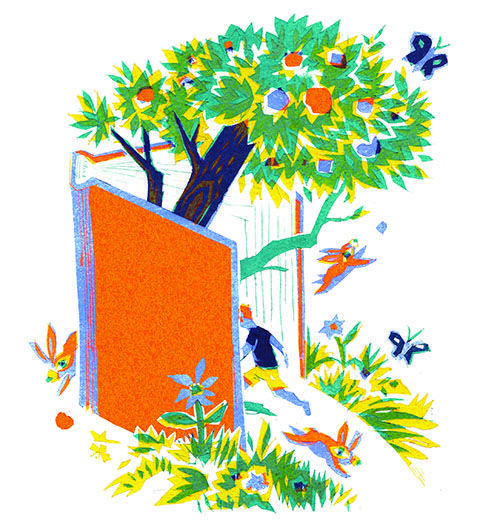
Illustrtion by Kyle SteckerIllustration by Kyle Stecker

Thursday, October 22, 2015

Pulling on the reins

You know how old movies used to show calendar pages fluttering off into the wind to indicate the passing of time?  That's the way our days feel around here.  We are working on college applications again - round two.  I am seriously thinking about soliciting my services as an essay commentator for college apps. I have great ideas. I wish my son would use them. 
Instead of doing homework, my sophomore likes to play with clay.

*****
We are also enjoying sports, swimming, entertaining, and talking about Halloween costumes. I felt like a failure as a mom when my fourth grader thought All Saints Day was the day after Halloween because the church wanted to have something holy after Halloween. Wrong way around there.  I tried to explain, but she turned off her ears. And she absorbed even less of my explanation of All Souls' Day after a viewing of the Book of Life movie.  Day of the Dead skulls and brightly colored flowers just seem to be an extension of Halloween decor (of which she thinks we need more, more, more) to her.
Go Tritons! They are playing the "Torreys," which are a kind of pine tree.
The high school mascot is a tiki guy. Kind of fun mascot suit.  
*****
I also wonder if my mom license will be suspended for the fat lip Baby sprouted after she fell off my bed. I didn't see the accident, but I think she hit her lip on my bed rail. Or smacked it on the floor. However she did it, her lip was purple and swollen for days. We went to the dentist and have been told to watch it for infection. One of her front teeth is loose and may have to be pulled. And it is jammed into her gum, which means her adult tooth may have been bruised and could wind up discolored.  A stroke against vanity. 
That's one fat lip.


Hello, Blue Angels!
*****


In other news, we went to the zoo! A life long dream of mine has been to visit the San Diego zoo because when I was little it had all the cool animals. And it still does: pandas, polar bears, orangutans, hippos, koalas. But I think a lot of other zoos have caught up in quality.   We were all walked out after completing the entire tour of the zoo.


This is the way I feel on school mornings


Or maybe I feel like this resting meerkat.

Or maybe like this relaxed orangutan. 
My camera skills are lacking, but really I identify with this mother wrestling her baby bonobo.


Here I am with all the monkeys.
*****
Shortly after this event I was talking with another mom of 3 or 4 at a scouting event. We were laughingly comparing stories of injuries, when I realized I better stop sharing soon, because she was running out of misadventures, and I was just just getting started with tales of stitches, sprains, and casts. 
*****
Our youngest son is just beginning Boy Scouts.  He never was a cub scout, but his three older brothers are all Eagle Scouts.  My husband balked at doing cub scouts because of all the crafts and popcorn sales, but he's agreed to stay involved with scouting as our sixth grader is old enough to begin.  He doesn't have a lot of enthusiasm for it right now, although he is making some friends in the troop.  This troop does a lot of activities (last weekend archery, this weekend a twelve mile trek, camping the following weekend), but it seems we have some event or other nearly every weekend, and this troop must not do very much fundraising because the fees for these things are much higher than elsewhere. Is it just California? Is it living in an area of affluence?  Even the public school field trips and church youth group socials seem to cost twice as much as elsewhere.  It feels like there's a hole in my wallet where all the money is running out.
*****
This is a hallway at the high school. It says
"Somewhere something incredible is waiting to be known."
I complain, but the truth is we have plenty and job security.  I wonder sometimes how we kept to a budget when my husband's salary was a third of what it is now. Of course we had fewer kids and smaller kids and fewer expectations. Providentially things continue to work out - one thing may cost more, but we are driving much less and saving on gas, so we spend less on something else.

Soon enough this stage of life - of feeding, housing, clothing and entertaining teenagers - is going to come to an end.  One more will fly the nest next fall. Of course, Baby will just be beginning her pre-teen years when the next youngest turns 18.  How will we fill the time? How will we make use of all the blessings we have been given?  One of the characters in Lodge's book I mentioned in the last post turns to hedonism in his middle age; another wants to be a missionary or social worker. Ironically, they happen to be married to each other.  I can certainly see this happening in our marriage -  my husband will be ready to enjoy the fruits of his labor himself instead of always passing them to the kids, while I feel more drawn to asceticism.  But admiring asceticism and practicing it are two different things, and unless I continue to shore up my faith and to practice acts of self-sacrifice now (no more snitching Halloween candy!), I'll never be able to make do with less.

*****
Today I celebrate my success in making do with less was refusing to buy a cute little tufted chair at a garage sale that was only $1.  I was really tempted - that's like free! We have an old chair that is ready to retire.  But this little find had white jacquard upholstery - it was only lightly soiled, but enough so that it would have bothered me until I spent $100 to have it reupholstered or slipcovered, and it wasn't that cute or sturdy. So I left it at the garage sale for someone else to find. (Although I admit I bought a potted plumeria for $5, which was also a bargain because of its size. And, following Maria Kondo's advice, it will bring me joy by reminding me of Guam and adding some color to our little yard.)
******
Now it's time to move into clean-up mode. We have about 50 teen-aged boys coming over for supper after football practice.  It's a tradition of this team to have team dinners that night before home games. I don't have to cook - other mom's are bringing pans of pasta, salad, bread, and brownies. But I do need to make sure I have clean bathrooms and the dishes are put away.  And that we have enough chairs. Just read Elizabeth Foss's article about hospitality, and so I'm not feeling stressed about cleaning up. Plus our guests are teen-aged boys.  They are used to stinky bathrooms, and perhaps even prefer them it seems to me.  To underscore Foss's point, I think our most successful efforts at hospitality are the spontaneous ones, where I don't worry about menus or flowers or cleaning cupboards and showers because I don't have time to fret, plan, or bark at the kids.  And to be honest, I regret some opportunities for hospitality that we have missed out on at our last duty station because I was too tired or too self-conscious about having a small house to invite someone over. 

I wish more neighbors would stop by for tea while I was in my pajamas like she mentions, although they'd have to catch me early to find me still in PJ's... 
*******

Monday, October 19, 2015

A Reading Frenzy

After slogging slowly through Dickens for a month, I have raced through some contemporary authors in the past couple weeks. I've been reading so much lately, that I think I've forgotten something that I read. I know I picked up and put back down the new Joyce Carol Oates book and a literary cookbook anthology called Books that Cook by Melissa Goldthwaite.  But I think I turned something else in at the library that I finished and forgot. . . Oh well - no impression, no review!

Here are the books that were memorable:
I quickly read the rather repetitive Life Changing Magic of Tidying Up  by Marie Kondo, the latest self-help craze.  I linked to it earlier.  I got through it quickly because I didn't bother to do anything she recommended, although I did add a few more clothes to the give away bag that I started when we moved in. The catch for me is that she recommends you touch everything you own to decide whether or not to keep it.  I JUST DID THAT when we moved. I'm not about to pull my books off the shelf or clothes out of the closet or mementos out of the garage again. And I made a valiant effort to give away two boxes of books before we left. I also tossed out a lot of papers, a lot of clothes, a few furniture items, etc.

But still I have mementos in boxes that I didn't deal with. I have little doodads like bobby pins and paper clips roaming the house instead of being stylishly and simply contained in one place.  I don't store things vertically but might try.  I'll apply Kondo's mantra of "Does this give me joy" in a few years when it is time to move again.  I made some notes, and I am determined to get rid of things that hide in the backs of closets, the darkness of boxes, or that never get admired or used. The nice thing is that she doesn't advocate keeping just a certain number of pants, dresses, and tops (although that might actually be helpful), but determining which things are really appreciated, even if they aren't used all that often, like one of my favorite dance dresses.

So next time we move, I am ready to tell my unappreciated items, "Goodbye. Thank you for teaching me what doesn't look good on me" or "Thank you for helping me understand what books I really like and don't like" or "Thank you for reminding me of a happy time that is over now." Since I don't have a hard time getting rid of things that are used up, broken or ruined, but I have a terrible time getting rid of potentially useful items, I think that acknowledging that a thing's usefulness to me has come to an end will be helpful.
******
The other book I appreciated but more as a sort of historical artifact was Selma Lanes' Down the Rabbit Hole: Adventures and Misadventures in Children's Literature. It is a collection of previously published essays about children's lit or authors, and as a book about books, quite good. But as a book written in 1973, it was very much dated, particularly the chapter on books about black children or by black authors.  On the other hand, I found it interesting to read both her evaluations of authors/illustrators who have stood the test of time - Maurice Sendak, Julius Lester, Leo Lionni  - versus those whose books now look very dated, like Uri Shulevitz, Edward Ardizzone, and Lore Segal, whom I never even heard of.  She praised Sendak and Seuss, who is one of my least favorite authors. I find him preachy and boring to read and I don't like his illustrations either. Sorry to offend any Seuss lovers (Lanes claims he understands children's psyche) - but I don't identify.  She also is not a fan of Richard Scarry, whom I love.  But we share an appreciation for Kate Greenaway over Joan Walsh Anglund, for books that challenge children and aren't just repackaged reprints or concept books (ABC or counting books - which can have charm but often don't) or serials that are written to reap financial rewards.  She does however appreciate the Hardy Boys and Nancy Drew for their escapist fictions and example of energetic, curious, enterprising teens. The chapter on America's lack of fairy tales was  also interesting - her thesis was that because America's belief in the individual spirit, in hard work over magic, we have more tall tales and "wonder tales" like the Wizard of Oz rather than fairy tales.  She praises the ability of children's lit to provide catharsis in confirming the "benign nature of the universe" - for adults and children.
******
Which is exactly what The Penderwicks in Spring, Jeane Birdsall's fourth Penderwick family tale, does.  Although disaster and heartache are hinted at (the beloved next door neighbor is in the Army off fighting in a war, romances are broken off, the death of the original Mrs. Penderwick is described), in general the story remains a heartwarming tale of a lovable bunch of sisters and one brother, who all have special gifts and are a family closely united.  Birdsall has a gift for making the Penderwicks seem like real people, but also too good to be true, without making them seem like goody-goodies.  Enough romance is hinted at innocently to satisfy a pre-teen girl's curiosity and romanticism, but not even close to enough to make a mother snatch the book away. My 13 year old and I argued about whose turn it was to read it. I can see how a reader who loves realism and despises the sentimental might scoff at this book, but I think there is enough adversity and change for the sisters to face that the book doesn't seem saccharine to me. I give it and the other Penderwick books unqualified two thumbs up.
*****
On the other hand, the last book that I want to mention has no danger of being described as sweet.  I can't decide if it was dark comedy or light tragedy. I know it is supposed to be comedic, but all the foibles of the married couples in David Lodge's Souls and Bodies are heart rending - perhaps because they altogether too familiar. I had trouble falling asleep for thinking about it.  The book has an ensemble cast of young couples who come of age in the early 50's, marry, and then are shaken about by the changes of the 60's and Vatican II. It ends in 1979 with the election of Pope John Paul II, with a (sardonic?) note of hope.

 Lodge, according to Wikipedia, has described himself as a "Catholic agnostic," and he incorporates many of his own experiences and emotions into the story by divvying them about among the couples - an English professor, a father of a child with Down's, a television show producer - and allowing authorial intrusion.  The couples' attitudes and faith change as they age and the world around them changes rapidly, very much as it has continued to do in the following 30 years.  Lodge tells their story wryly, as if he has sympathy for his characters' early convictions, but is compelled to acknowledge the insufficiency of their faith.  His description of all the ramifications of Humanae Vitae are spot on, and his characters experience both the good and the bad effects of relying on their consciences to make a decision about contraception.

It's a compelling read, and I'd love to discuss it with someone. But it is a book I would hesitate to recommend to just anyone. On the one hand, it is way too Catholic for a secular reader, unless it was someone interested in that time in history. I think my generation is unaware of how earth shattering the changes that seem mundane to us now were, (receiving communion on the hand, speaking English) so a casual reader might be confused and bored by the conflicts felt by the main characters.  For a Catholic reader fed up with the Church's stance on domestic issues or already questioning his faith, this book might be a confirmation of everything he suspected.  For a Catholic who has tried to remain faithful, the book is both a challenge and a confirmation.  Some of the characters appear downright silly in the way they embrace change. Or heartbreaking in the way their marriages suffer.  Or prescient in they way they foresee more changes to come. But it is telling that Lodge calls himself an agnostic because the book seems to express to me a deep longing for faith, for something True and Good to believe in.  Despite the politics and the theological mind benders - or faith crushers as the case may be - I can't help but set the book down shaken, but reassured by a sense that the desire for God, for the reality of Love and Forgiveness, permeates the story. Lodge seems to struggle to answer if it all boils down to physical relationships or is there something more?

I almost need another dose of the Penderwicks to recover.


Friday, October 9, 2015

Accomplished

I did it! I finished The Old Curiosity Shop!


I have owned this book for probably twenty years, started it many times, and at last, after weeks of reading a handful of pages at a time late at night, I turned the last page and sighed with relief and a bit of sadness.  Although this is not my favorite Dickens book, it still had the ability to pull me into the world of Industrial Revolution Era England - and some of the themes seemed to tie in with recent history.
http://allaboutdickens.blogspot.com/
It's easy to see why this book doesn't have the popularity or spirit of David Copperfield or Great Expectations.  The setting is dark, and the plot goes on and on.  Little Nell is a very one dimensional main character. She has no weaknesses except physical weakness.  And her grandfather lacks personality - she is trying to save him from his addiction to gambling and his debtors, but he apparently has more physical endurance than she.  Kit, her faithful swain, is perhaps the easiest character to attach to, but even he has no real roundness.  The evil dwarf Quilp is unrelentingly demonic, a memorable creep.  Dick Swiveller, the clerk, is perhaps the only character who undergoes some conversion experience; from a pawn of Quilp to a patron of the little maid enslaved by the Brasses, he seems to awaken to the need to take personal responsibility for his own livelihood and to care for others.

So if I didn't really love any of the characters, and the setting is for the most part the dark side of Victorian England, except for the little village at the end where Nell and her grandfather and the good schoolteacher finally find respite, why bother finishing the book at all?  I'm not teaching Dickens or taking a class. Part of my doggedness is just to say I did it, so I did not have to look at that book condemning me each time I unpacked it.

But after I was about two hundred pages in, I began to want to read more. I stayed up later, or sneaked chapters in during the day.  Escapism? Or delight? The cast of characters, although cartoonish, are memorable and entertaining. Nell and her grandfather have an interesting series of adventures.  And Dickens's language really is lovely. Contemporary literature has more rounded characters and more realistic settings, but I can't think of any contemporary writer who writes with the vocabulary and syntax that was de rigueur prior to, say World War 1.  And how fewer books existed then! But many of the lackluster novels have disappeared, so those that have stood the test of time may give the era a better reputation than it deserves.

The book is also replete with some witty observations of human nature, even if the characters are rather flat, remarks that remind me, even when tempted to think that our own era is the most immoral ever to exist (because, for example, California now has an assisted suicide law), that human nature has changed very little. For instance, as Mrs. Quilp is bemoaning how weak and guilty she is for not standing up to her evil spouse, Dickens observes "...conscience is an elastic and very flexible article, which will bear a deal of stretching and adapt itself to a great variety of circumstances. Some people by prudent management and leaving it off piece by piece like a flannel waistcoat in warm weather, even contrive, in time, to dispense with it altogether, but there be others who can assume the garment and throw it off at pleasure; and this being the greatest and most convenient improvement, is the one most in vogue."  (100).  Or when the Brasses and Mrs. Quilp are belittling Quilp for his deformity, unaware that he is listening to them and delighting in the thought of catching them misbehaving. He loves the thought of catching them gossiping more than he is hurt by their remarks.

This line regarding Little Nell's feelings on leaving home struck a chord: "Why is it that we can better bear to part in spirit than in body, and while we have the fortitude to act farewell have not the nerve to say it? On the eve of long voyages or an absence of many years, friends who are tenderly attached will separate with the usual look, the usual pressure of the hand, planning one final interview for the morrow, while each well knows that it is but a poor feint to save the pain of uttering that one word, and that meeting will never be."  A familiar situation to many a military couple or family. Easier to pretend that the final goodbye is yet to come.

Another pleasant to read passage describes the comforts of coming in from a cold drenching rain to a warm fire, mulled cider and hot stew.  The earlier suffering is quickly forgotten, except to serve as "enhancing the delights of the present time."

The book has several insights into what might be Dickens' religious views. Kit's mother attends a fire and brimstone church with a preacher who condemns incarnational pleasures, and she feels guilty after indulging in a feast of oysters or delighting in pretty things like a bow in her bonnet.  But Kit reproves her by saying, "Can you suppose there's any harm in looking as cheerful and being as cheerful as our poor circumstances will permit? Do I see in anything in the way I'm made, which calls upon me to be a snivelling, solemn, whispering chap, sneaking about as if I couldn't help it, and expressing myself in a most unpleasant snuffle? on the contrary, don't I see every reason why I shouldn't?... ha, ha, ha! An't that as nat'ral as walking, and as good for the health?"   He seems to be akin in feeling to Belloc, whose quote about "Wherever the Catholic sun doth shine / There's always laughter and good red wine" is another reminder to keep the Gospel of Joy exhorted by Pope Francis.

Dickens also shares with Pope Francis a preference for the poor:
 "...if ever household affections and loves are graceful things, they are graceful in the poor. The ties that bind the wealthy and the proud to home may be forged on earth, but those which link the poor man to his humble hearth are of the true metal and bear the stamp of Heaven. The man of high descent may love the halls and lands of his inheritance as a part of himself, as trophies of his birth and power; .. the poor man's attachment to the tenement he holds, which strangers have held before, and may tomorrow occupy again, has a worthier root, struck deep into a purer soil,,, that man has his love of home from God, and his rude hut becomes a solemn place... if those who rule the destinies of nations would but remember this, - if they would be think how hard it is for the very poor to have engendered in their hearts that love of home from which all domestic virtues spring, when they live in dense and squalid masses where social decency is lost, or rather never found, -...many low roofs would point more truly to than sky, than the loftiest steeple that now rears proudly up from the midst of guilt, and crime, and horrible disease.... In love of home, the love of country has its rise; and who are truer patriots or the best in time of need -- those who venerate the land, owning its wood, and stream and earth . . or those who love their country, boasting not a foot of ground in all its wide domain?" 
A lot of rhetoric to add to the argument that the poor need decent shelter, a place to call home in which to take pride and comfort.

Additionally, as Nell begins to fear death, Dickens gives some words to an old schoolmaster about the redemptive power of memory -
"There is nothing innocent or good, that dies, and is forgotten. Let us hold to that faith, or none. An infant, ...dying in its cradle, will live again in the better thoughts of those who loved it; and play its part, through them, in the redeeming actions of the world, though its body be burnt to ashes or drowned in the deepest sea."  
He goes on to describe how "angels" do their work on earth by inspiring the loved ones left behind to be good.  Not perhaps an orthodox teaching about death, but it gives comfort to Nell and seems to be a reiteration of the idea that many small kindnesses performed out of love and friendship can generate more good in the world than one or two acts of largesse.  And in fact, several minor characters in the book are vehicles of compassion, despite their unusual jobs (the wax museum owner) or their poverty (the ironworker).

And this idea is reiterated at the end of the book:
"When Death strikes down the innocent and young, for every fragile form from which he lets the panting spirit free, a hundred virtues rise, in shapes of mercy, charity, and love, to walk the world, and bless it. Of every tear that sorrowing mortals shed on such green graves, some good is born, some gentler nature comes. In the Destroyer's steps there spring up bright creations that defy his power, and his dark path becomes a way of light to Heaven."

Such explicit sermonizing is perhaps why some academicians place Dickens on a lower rung of creative genuis (similar to the tongue-in-cheek protest against the sentimentality of Renoir?), and also the reason why movies like "War Room," which we just saw this weekend, probably won't get positive critical reviews from the art critics. But the audience was cheering during "War Room." The public loved it, and Dickens, too, was well loved. Is the moralizing of the secular culture treated so harshly by art critics?

Small victories sometimes feel more like accomplishments than large ones - for instance, I also got hired for a new job!  This may be the fastest turn around I've had in terms of finding employment.  I don't begin until next semester teaching at the Navy College, but I have turned in my new hire packet and met with the advisors.  Next step: hope a class fills so that I actually get to teach. And hope that the Navy doesn't end its relationship with the colleges and universities that offer special degree programs to sailors and dependents.  The cost to the military is minimal compared to other costs - the military provides space and utilities on bases and ships, manpower to process base pass applications for personnel, and some tuition assistance, but on paper it doesn't look like these programs are mission essential.  In reality, they improve the minds and morale of the sailors immensely, adding value to the Navy's forces that can't be calculated.

Perhaps I'll add a little Dickens into the syllabus next term.  But not The Old Curiosity Shop... time to decide if I let it remain on my shelf. Still undecided whether the value of these quotes is worth the shelf space consumed by a book no one else in the family will read, and I will probably never read again. But I am happy to have read it at last and enjoyed the evenings I spent wandering the English countryside with Nell and her grandfather.

Curiosity Shop
http://charlesdickenspage.com/curiosityshop.html
Reading is one form of escape. Running for your life is another.
-Lemony Snicket