Friday, January 28, 2011

Wisdom from Dubus

I'm subbing at the high school library today (joy! Can I do this always?) and came across this quote from Andre Dubus in one of the books to be reshelved, The Catholic Passion: Rediscovering the Power and Beauty of the Faith by David Scott.  The quote speaks to the motion I have felt in my heart after this week's tragedies:
Living in the world as a cripple allows you to see more clearly the crippled hearts of some people whose bodies are whole and sound.... And while most of us, nearly all of us, have compassion and love in our hearts, we cannot or will not see these barely visible wounds of other human beings, and so cannot or will not pick up the telephone or travel to someone's home or write a note or make some other seemingly trifling gesture to give to someone what only we, and God, can give: an hour's respite, or a day's, or a night's; and sometimes more than respite: sometimes joy.
A call to small actions.

Although I have read some of his short stories, I didn't know that Dubus was struck by a car while helping a woman and was injuried so badly that one of his legs was amputated, and he never regained use of the other.

Thursday, January 27, 2011

The Human Experience

With all the recent sorrows, it was the right time to watch The Human Experience. My cousin recommended this movie made by a few young men who lived for awhile at the St. Francis House run by the Franciscan Friars of the Renewal. And it is a movie worth watching, especially young people. If it seems a little amateurish, it makes up for that with earnestness and sincerity.

The film features two brothers in their early 20s, Jeffrey and Cliff Azize, who set out on a journey to discover what three different lifestyles (the human experiences of the title) can teach them about what makes life worth living. How do people keep living when life seems hopelesss?

Their first experience is spending a week of winter with the homeless of New York. They slept in cardboard boxes and begged food. They interviewed several homeless people and talked with a few volunteers at a soup kitchen. The interviews were some of the richest of the film. One woman told the story of how on one of her first nights on the street, she observed a New Yorker come across 4 homeless dogs. He got on his cell phone immediately to find them shelter, and other people stopped and offered to take a dog or help find them homes. But no one noticed her.

Another homeless guy made the poignant remark that he knew God had a purpose for him, even if that purpose was to make other people take notice and be charitable.

The next stop for the brothers was an orphanage for abandoned and disabled kids in Peru. This segment had lots of heartwarming footage of the orphans going to therapy along with some clips of interviews the brothers conducted with life “experts” – Fr. Richard John Neuhaus before his death, an activist, a neurosurgeon, an artist, an actor, a rabbi, Dr. Alveda King, et al, - who reflected on suffering and finding meaning in life. These clips were interesting, but one criticism my husband and I both had was that too often the film allowed aphorisms from these interviews to take the place of showing the people suffering finding consolation or simply living. We both felt that less talk and more show would’ve made the movie better. But on the other hand, the audience the show is geared toward is sometimes motivated by short powerful mottoes.

The third experience was visiting Ghana to witness people with AIDS and leprosy continue to find a will to live even in the midst of poverty and illness. One of the best anecdotes from this segment was the story told by one of the sufferers with AIDS about how the community looked out the young kids whose parents died: the community gave them a new father and a new mother. No one stayed an orphan, no matter how old they were.

I hope the kids found something to reflect upon. I know I was struck yet again with the awareness of how much we have. And of how tightly I hold on to things I “might” need. How many times have I packed up clothes to hand down to a sibling, only to find they don’t fit the next child or have lost their elasticity? I should have been more generous about passing those things on to someone else. But more than I need to be generous with things, I need to be generous with gratitude. I need to remember to offer thanks verbally more often, and reflect on my face, not anxiety, but cheerfulness. I know where my next meal is coming from, I’ve got a warm bed, I’m as healthy as a middle aged horse. But too often I don’t let those comforts bring me peace.


We also watched Romance Without Regrets recently with the older boys – I want to giggle like a preteen when I say this. Actually I only watched the end because I put the youngers to bed. But I could hear the boys laughing so something Jason Everts said resonated. I think it also provided a hopeful message about the power of love.

Wednesday, January 26, 2011

Someone else is crying now

The Angel of Death has been busy: My Syrian friend’s mother, another friend’s mother-in-law, the daughter of my husband’s co-worker, my son’s teacher’s mother, and most recently, a young man in my husband’s regiment who shot himself in the head.

The previous deaths were all sudden, but of natural causes. The last is harder to understand.

News of a suicide is always unsettling. When you hear about someone who on the surface seemed relatively happy – someone who had just made a dentist appointment, who had a new girlfriend, who was doing well at work - it makes you feel a little dizzy, like you’ve been punched in the stomach by while having a friendly conversation.

I didn’t know this young man, but my husband says he wasn’t on drugs, was fit and a hard worker, and although he had gone through a rather bitter divorce, he now had a girlfriend who was in the military, also, and had earned good marks. So his life was looking up.


Until it wasn’t. The chaplain told my husband, in their late night conversation while waiting for news in the ER, that most men think of suicide for a brief time, but don’t act on it unless alcohol and guns are available.

Part of the tragedy in this situation was that when the young man was found by his devastated friend, his heart was still beating. He has been on life support for three days because his next of kin is the almost ex-wife. Apparently some divorce paperwork has not been completed, so she has the legal responsibility of terminating life support. She, meanwhile, is deployed in the far east, but is on the way home. So the hospital is keeping the heart and lungs working. Organ donation is questionable because the Mormon mother, who is too unhealthy to travel here, doesn’t want her son cut up and because, after days of life support, the organs may be too weak and medicated.

I don’t know the theology of when the soul leaves the body. Is the soul lingering there in that brain-dead body, regretting its decision? Did he have a moment of repentance as the trigger was released? Or was he conscious for part of the several hours he lay on the bloody bathroom floor before his friend broke into the apartment and discovered his body, swollen with still circulating blood and fluids?


This situation has not been hidden from the kids because everyone was milling about getting ready for bed and heard when my husband received the first call and said “Oh no” – or the sailor’s variant of that. So it has become a topic of family prayer and conversation – or rather lecturing on my part. How can I drill into my own children that life is always worth living, especially when I’ve been suffering myself a bit from winter doldrums or PPD, post party depression, after the holidays? (Even my six year old told me I was crabby most days yesterday.) I believe but fear what the chaplain said about everyone contemplating suicide at some point – that “who would miss me if I were gone” line of thinking. If only this boy’s friend had arrived a few hours earlier, to be that face of someone who would miss him. To reach out and touch him and reconnect him to the world of his fellow sufferers.

Perhaps witnessing the sorrow of their dad and hearing about all the people who are involved in mourning this young man, seeing the concentric waves of sorrow as the news filters into the community, especially wounding those who have lost someone else from suicide, will help my children to see how many people would miss them were they gone.  I watch my tongue, try to be cheerful, and give them extra hugs at night.

Tuesday, January 25, 2011

On mourning

A friend’s mother died suddenly just over a week ago. This friend is from Syria and had not been home to see her mother in three years, and her mother had come here to visit only twice, years ago, both times staying close to a year after the birth of her grandsons. I met this friend through our kids, of course - her sons are friends with my older boys. But she is also a part of a circle of friends who are expats living in coastal Mississippi: one from Mexico, two from Columbia, two from South Africa, and this friend who is from Syria. Somehow, I’ve been included – I guess being a Midwesterner is foreign enough.


After I heard the news, I called and left a message offering condolences and food. She texted back, saying thanks, but no thanks. If it weren’t for the urging of one of the Columbians, a psychologist, I wouldn’t have taken her a lasagna last Sunday. But my psychologist friend was very adamant that we “make a drama” so that she will have a good bereavement.


I was a little nervous about entering the house of mourning, and planned to just drop off the food and run. But my friend invited me in and seemed to welcome the opportunity to talk. So for close to an hour she told me stories about her mother and their relationship: The suddenness of her death from a pancreatic stone which was misdiagnosed initially as food poisoning; how her brother scheduled the funeral for the next day, knowing she couldn’t get there in less than 36 hours; that she does not plan to return to Syria, although the other expats are urging her to go back to visit her father, to whom she is not as close.

I called my mom after the visit.

Now I think I would rush back home, if I were in her situation. I would want to see my mother’s grave. I would want to stand where she might have stood last, to see the places she loved. I love going home. I do feel expatriated in many ways.


One of the things my friend mentioned was how she talked on the phone to her mom everyday; if it weren’t for her mother’s encouragement and advice, her marriage would be faltering, her health would be in decline, her sense of self would be crushed. She apparently has formed few friendships here, even after living here 15 years. So not only does she feel orphaned because she has lost her mother, but though it is trite to say, she also lost her best friend.


More than one person relocated here has commented how difficult it is to make friends with the locals, despite the reputation of Southern hospitality. Everyone is friendly and helpful, but few invite you over for coffee or Sunday dinner. And I understand that – as much as I need friendship and helpful neighbors, I also know I’m going to be moving again in six months. So I don’t blame the people who have grandparents and cousins around for not making our family a part of their fold. But this friend from Syria, and my other expat friends, are here for the duration. Fortunately, they have each other to rely on. But you do sometimes feel sorry for the kids. They get invitations to birthday parties that include the whole class, but not invites to come over after school on Fridays or to play on Saturday afternoon. My 8 year old daughter is the one who feels this most keenly. She would love to spend more time with some of the girls in the class, but their mothers are friends in Junior League together, so they spend time with each other.


On Sunday, my psychologist friend arranged a memorial mass followed by a potluck at the parish hall. The mass was a regularly scheduled Sunday evening mass, and the priest told a tactless joke at the end about 3 souls who were asked by St. Peter about what they wished they heard at their funerals. (The last one answers that he wishes he heard “Look, he’s breathing!” Groan.) But it was well attended, and many people offered condolences and stayed for the supper.

As people finished eating, my friend stood up to offer her thanks for this outpouring of sympathy and assistance. She commented how she thought she was so alone and was full of fear after she heard the news of her mother’s death. But what she discovered was this wellspring of affection and friendship: the presence of friends. Now she wants to give back more and invited everyone to a meal in a month in honor of her mother, a Syrian tradition. Tears were flowing from all the sentimental types. It was a moment of real fellowship. And my Columbian friend was right – the drama had made her bereavement better.

Thursday, January 20, 2011

New Acquisitions

Over the weekend, we did a little redecorating - trying to recover some of the color that departed with the last of the Christmas ornaments, perhaps.

First, we took down our sepia sketches of Roma, (they'll find a home elsewhere) and replaced them with a hand colored print of "Ditches" by Walter Anderson. This is our souvenir from our stay in Mississippi. I usually get a Christmas tree ornament, but I forgot to look for one. So instead:


The print with our saggy leather couch. I didn't want a leather couch when we bought it 6 years ago because I don't like how saggy the cushions become. But it does hide the effects of life with six kids and a dog.

My husband built the frame since it is an odd size.

We've also added bean bag chairs. Who knew they would be so loved that my oldest went out to buy one himself with his Target gift card from Great-Grandma?

This is Epiphany morning. Traditionally we give a book, a article of clothing and a toy, something from each king.  Everyone just happened to have on pajamas that matched their bag.

I guess he really liked being a mushroom.


We also added this fellow, the carnivorous pitcher plant. My soon to be eleven year old wanted him for a birthday gift.

Wednesday, January 19, 2011

Parenting and Education

I've come across some more articles on parenting styles with regard to education:

That piece in the Wall Street Journal about Chinese mothers stirred up a lot of emotions in other readers – upwards of 5700 comments, more than any other article they have printed. On Saturday WSJ printed a response from Ayelet Waldman, the new voice of contemporary mothers, although I’m not sure she’s who I’d pick to represent my views.  In this piece, though, she makes some good points about parenting to the needs of your child.

Then yesterday NPR had an interview with a mother, Vicki Abeles, who has made a documentary film about how stressed out kids are called “Race to Nowhere.” Her preteen daughter was suffering from sleeplessness and anxiety because she felt so much pressure to perform and excel.

So on the one hand you’ve got the tough Chinese mothers saying “Push your children!” and on the other hand some softhearted ones who say “Don’t push your children too much!”

I asked my middle school sons if it seemed kids were stressed at their school. They couldn’t think of anyone, except some friends who get worked up with they aren’t doing well at their video games.

Third article: a book review about a book about social media  called Alone Together: How We Expect More from Technology and Less from Each Other. The reviewer made the point that Holden Caulfield, with his hatred of phonies, would be appalled at how authenticity is no longer a virtue; everyone is now more concerned about how to make their online/social media self more attractive than about being authentic. A couple of kids were quoted about how they prefer to text than talk on the phone because they don’t want to show their emotions.

Combine that with an article a couple months ago about the amount of texting kids do. Somewhere I read about a 14 yr old girl who sent 25000 texts in a month. I asked the college kids last semester how many texts a month they averaged, and it was around 2500-3500 – about 100 texts a day.

And then this piece about how little some college kids are reading.

It would be pretty easy to make the argument that kids aren’t under pressure to excel at academics, but to keep up with their social personas. Compare the number of times you see a preteen/teenager with a book with the number of times you see one with a phone. How many know who Holden Caulfield is? (Not that he’s the ideal character, but he’s an icon most teens probably don’t recognize.)

I wonder if the mother who made the documentary might find that if kids cared about learning – if their imaginations were ignited – they might not feel so stressed out.  Get those kids interested in reading.

Tuesday, January 18, 2011

Neighbors

Last week, a couple of kids from down the street came over every day after school to play and then came over on Sunday, too. I should be happy about this because one of my quibbles with our house is that our neighborhood doesn’t have many children. But of course, not only did I just read about Chinese mothering and feel guilty about how little oversight I give my kids’ school work, but I also don’t really have much affection for these particular kids, a brother and sister aged 5 and 9.

Not that these are bad children; they just lack imagination.  We have some friends who have kids who are full of ideas, who never ask to watch tv or play video games, who my kids love to have over.  But that's not these kids.  One day I returned home from picking up my younger kids a few minutes after my older sons had been dropped off by their afterschool ride, and my boys had let these kids in and turned on the Wii for them, even though we have a no-Wii on school days policy.

I don’t know these kids well, or their family at all, but the fact that they wander the street every day after school and that one day their mother was driving down the street at 7 looking for them, doesn’t give me a very good impression of their home life. I lectured my sons about letting them in when I wasn’t home, but I couldn’t help but feel a little guilty for doing so.

That particular day the brother and sister showed up because they were locked out of their house and the babysitter, who lives a few doors down, wasn’t home. When dinner time rolled around, we sent the kids home, but still no one was there, so they came back and ate dinner with us. Apparently, the mother and the babysitter had a miscommunication. But now these kids keep asking if they can eat dinner with us. It’s like we’ve fed stray dogs. They come over after school, play a couple minutes, and then ask for snacks. A lot of snacks. I remind them to say please and thank you to slow them down. Then they stay until we send them home.

So one minute I’m irritated that I’m feeding these mannerless children. The next minute I’m feeling guilty for my resentment and reluctance. My lack of charity. We watched The Blind Side not long ago, and it had its intended effect – it made me feel that I need to do more for the poor. Since I don’t have a class at the community college this semester, I keep meaning to volunteer at St. Vincent de Paul - another resolution I need to act upon.

But here are these kids: I don’t know if they are “poor;” their mother has a job; I haven’t asked if they have a dad around, but they don’t mention him – and I want them to go away. They obviously are less well off than us, because they like our boring house so much. I am embarrassed to mention my coldheartedness. I want to help faceless people. I don’t want to be inconvenienced by children who may not be a good influence, who want to eat the food in my pantry, not what I bought to give away, who interrupt me when I’m trying to make dinner for my own family.  I know I need to be generous to them, but I also want to protect my own children. 

Is setting a good example of generosity and hospitality more important than protecting?

Friday, January 14, 2011

Chesterton poem on Football

G. K. Chesterton visited Notre Dame in October, 1930, as a guest lecturer. He was invited to give a series of lectures in Victorian literature, but he also attended the solemn dedication of the stadium and the Notre Dame - Navy game, in which the Irish defeated Navy 26-2.  Chesterton composed a poem marking the occasion.  The Notre Dame football team may not have had a good season for several years, but how many football teams have inspired such poetry?  (I read an excerpt of the poem in an article by Dale Ahlquist in the most recent Notre Dame magazine. The full poem was found here.)

The Arena
Causa Nostrae Laetitiae

(Dedicated to the University of Notre Dame, Indiana)

           There uprose a golden giant
           On the gilded house of Nero
Even his far-flung flaming shadow and his image swollen large
           Looking down on the dry whirlpool
           Of the round Arena spinning
As a chariot-wheel goes spinning; and the chariots at the charge.

              And the molten monstrous visage
              Saw the pageants, saw the torments,
Down the golden dust undazzled saw the gladiators go,
               Heard the cry in the closed desert
               Te salutant morituri,
As the slaves of doom went stumbling, shuddering, to the shades below.

                                    “Lord of Life, of lyres and laughter,
                                      Those about to die salute thee,
           At thy godlike fancy feeding men with bread and beasts with men,
                                    But for us the Fates point deathward
                                     In a thousand thumbs thrust downward,
           And the Dog of Hell is roaring through the lions in their den."

  I have seen, where a strange country
Opened its secret plains about me,
One great golden dome stand lonely with its golden image, one
  Seen afar, in strange fulfillment,
     Through the sunlit Indian summer
That Apocalyptic portent that has clothed her with the Sun.

             She too looks on the Arena
             Sees the gladiators grapple,
     She whose names are Seven Sorrows and the Cause of All Our Joy,
                     Sees the pit that stank with slaughter
                     Scoured to make the courts of morning
For the cheers of jesting kindred and the scampering of a boy.

                          “Queen of Death and deadly weeping
                            Those about to live salute thee,
               Youth untroubled; youth untutored; hateless war and harmless mirth
                              And the New Lord's larger largesse
                              Holier bread and happier circus,
                 Since the Queen of Sevenfold Sorrow has brought joy upon the earth.”

            Burns above the broad arena
            Where the whirling centuries circle,
Burns the Sun-clothed on the summit, golden-sheeted, golden shod,
            Like a sun-burst on the mountains,
            Like the flames upon the forest
Of the sunbeams of the sword-blades of the Gladiators of God.

                          And I saw them shock the whirlwind
                          Of the World of dust and dazzle:
      And thrice they stamped, a thunderclap; and thrice the sand-wheel swirled;
                          And thrice they cried like thunder
                          On Our Lady of the Victories,
      The Mother of the Master of the Masterers of the World.

                                  “Queen of Death and Life undying
                                   Those about to live salute thee;
                   Not the crawlers with the cattle; looking deathward with the swine,
                                    But the shout upon the mountains
                                    Of the men that live for ever
                   Who are free of all things living but a Child; and He was thine.”

--G.K. Chesterton (1930)


Wednesday, January 12, 2011

Book reviews

A slow day today, so here are reading notes I’ve been meaning to make.
Favorite Reads 2010:
This might be the year of the memoir for me: I finished A Year of Magical Thinking as the year closed and began with Eudora Welty’s thoughts of William Faulkner. The Blind Side, A Right to Be Merry, Julia and Julie, Liar’s Club, Night, Parched, Capote’s stories, Dylan Thomas’s Christmas, Laura Ingalls Wilder…

Favorite Children’s Read Aloud – As much as I’ve enjoyed revisiting Laura Ingalls’ family, I love, love, love reading aloud from F. A. Steele’s English Fairy Tales. The stories are outlandish and magical, but the language has more magic. The words trip from the tongue. Love the Arthur Rackham illustrations. The portrait of Catskin with her pale skin and dark eyes staring from her motley furs is hypnotizing. And Jack with giant heads tied to his belt as he enters into a room to save the sisters tied by their hair to the wall is positively dashing.

Most inspiring book: Probably Mother Mary Francis’ A Right to Be Merry, which I read at the right time, although I also truly enjoyed Peter Kreeft’s Prayer for Beginners.

Better the second time: or third time in the case of My Antonia. Simply beautiful. In This House of Brede is probably a close second. Both I would read again.


Favorite novel: I was surprised by how much I enjoyed Michael Ondaatje’s The English Patient. Heart wrenching. But Capote’s short stories also touched a chord and merit revisiting.


Some quotes from recent reads:

Love the epigram from A Tidewater Morning , three short stories by William Styron about a young man (semi-autobiographical?) growing up an only child in Virginia: from Thomas Browne’s "Urn Burial": “The long habit of living indisposeth us for dying.”


From Truman Capote’s “The Thanksgiving Visitor”: Young Truman has only his old aunt, a misfit herself, as a friend. She invites the school bully to Thanksgiving dinner. When Truman tries to trump the boy by calling him a thief, the aunt tells Truman she is shamed more by his deliberate cruelty, planned cruelty, than she is upset by the guest’s thoughtless theft.

In "A Christmas Memory," this aunt dies. The story closes with the image of Truman and the aunt flying kites they made each other for Christmas. She imagines she has had a glimpse of God as they watch the kites flutter in the winter sky: “I’ve always thought a body would have to be sick and dying before they saw the Lord. And I imagined that when He came it would be like looking at the Baptist window. Pretty as colored glass with the sun pouring through, such a shine you don’t know it’s getting dark. And it’s been a comfort to think of that shine taking away all the spooky feelings. But I’ll wager it never happens. I’ll wager at the very end a body realizes the Lord has already shown Himself. That things as they are .. just what they’ve always seen, was seeing Him. As for me, I could leave the world with today in my eyes.”

From A Bigamist’s Daughter is one of the last books I read on our trip. Reminded me a little of one of my all time favorites, The End of the Affair, with its twist on the object of love.

Synopsis: Young woman at a vanity press gets involved with one of her writers, a man who needs an ending to his story about a “noble” bigamist. They both use each other for selfish purposes, but, of course, eventually feel a real connection. If the story remained on this level, it would be forgettable, but the twist comes from Elizabeth’s reflections on her past loves and other relationships, especially with her absentee father and emotionally distant mother. Every relationship seems to have some sort of duplicity, or some way in which it falls short of the ideal. We find out the Elizabeth once entertained the thought that she might be a nun, and now none of her lovers can measure up to that ideal of the Perfect Love, the ideal Father. McDermott never takes the thread that far, she never commits Elizabeth to being in love with God, but the suggestion is there.


Some quotes: Elizabeth’s mother, named Dolores, sorrow, says in response to Elizabeth’s surprise when her mother’s new lover suggests they had a rough life: “Children often mistake their own happiness for that of their parents.”

Despite Elizabeth’s friend’s disappointment with her wedding compared to her dream of a wedding, she still wants to get married: “But she wanted to fall in love again and she could only think of love, real love, as a moment of consummate seriousness, consummate honesty. A moment when all the laughter stopped, when her life, which she admitted was only skimming along its surface now, would stop, plunge her to a depth she had never before reached, that she could only equate with holiness or revelation or a cool silent place where her past and future would meet like two fine sprays of water, meet and mingle and rise up like a geyser and burst forth like some miraculous spring or blessed fountain (a fountain of champagne, perhaps, because, had she thought about it, the place was not unlike a church and the sound of mingling water not unlike that of whispered vows). . . . She wanted real love, she wanted true attention. She wanted, at least, to be gazed upon in the same way her authors gazed upon her, listened to in the same way her authors listened to her. She wanted to find in the real world, their kind of adoration, both to give and receive, but mostly to show Bill someday in the future when they met again, and over lunch or a drink in her dimly lit apartment she told the triumphant story of her life without him.” (95)


At her mother’s funeral, she handles her mother’s rosary beads and asks for faith: “If I could have rubbed some of that old belief from them, I would have. If I could have brought them to my lips and sucked from them anything other than the salt from my own fingers, any faith, any comfort, any of the old trust that the words truly meant something and that their meaning endures beyond all loss, I would have.”

Here is how the author/boyfriend, Tupper, describes his main character, the bigamist: “A man who is, ironically, incapable of having an affair. A man who must always, always sanctify his love with marriage, who must establish a home for himself and any woman he loves and then must return to that home whenever he can. A man of great nobility, I think. A truly romantic, heroic character.” Elizabeth has trouble articulating what she finds wrong with that idea, but she herself struggles with presenting herself as something she’s not, of being found out she’s a fraud.

The motif of Penelope, waiting all those years for perfect Odysseus, to return while confronted with suitors, runs throughout the story. Wives waiting for perfect husbands, or telling stories about perfect husbands. Meanwhile, she seeks to understand why some couples “suffer the tyranny of what lovers do to each other.”
When she suggests that women could be bigamists, Tupper is appalled. He believes that all women want a reason for men leaving and a hope for them to return. Men don’t get their identity from women as women do from men, he says. But then he is appalled that the innkeeper, Hedda, seems to treat men as he suggests bigamists treat their wives – love them and leave them to love others.


So while on one hand, Elizabeth admires the image of a faithful Penelope awaiting Odysseus, there is also this description of how Elizabeth’s first love in school was God, how the nuns who taught her have led her to believe that marriage is a religious experience. She meditates on her favorite picture of Elizabeth, old and barren, greeting Mary, young and virginal, whose husbands are “no match for the virile God whose will alone could fill their wombs.” (171)


This image remains as Elizabeth goes on to uncover how her mother, her friend Joanne, her father’s aunt (or perhaps mother), and even herself, found themselves holding on to an ideal of love even when confronted with a flesh and blood man who loves them.

After visiting Joanne, who was “bound to be disappointed” because she had so many ideas about being a bride and a housewife, Elizabeth thinks, “A little feminism is a dangerous thing… A little feminism, she thinks, merely makes you suspicious. Makes you kick at all those pretty pink rocks of romanticism, exposing their wormy undersides, but it doesn’t make you lift them up and toss them out completely. Doesn’t keep you from pity and hope and seeing his side of it. From those old longings for a husband, beloved husband buried forever at your side.” (207)


And so Elizabeth continues to hope for true love, even though Tupper doesn’t measure up, and even though she tells him she’s still in love with her first love, who, she thinks, still loves his first girlfriend, even though he professed to love Elizabeth.


At the graveyard of her great-aunt or perhaps grandmother depending on the story she chooses to believe, Elizabeth wonders about her mother, “who needed the myth of Husband, eternal Husband, and the other ordinary husband who was willing to believe in it . . . Her mother, who could be reconciled to her life, to his life, to all that through him she had lost, by the lovely story it made.”


She doesn’t fault her mother or her aunt for believing the “myth” that “love will come to you, love beyond everything. It will change your life forever. The myth he alone can refute; that his absence alone can make irrefutable. The myth in which he is best left in shadow, best left imagined, or remembered, or told. Told in the darkened bedroom, told to the warm, the homely, the necessary husband: the myth of another – Husband, Father, Prince.”

“Because some love,” [Elizabeth] whispers, “goes beyond even the lover himself. Some love can surpass even him, the real lover, until his real presence is no longer required for the love to last. Love that’s like a spiritual life, like pure faith.” She hesitates, but his head is bent as if he were a priest in a confessional or a pilgrim at a shrine. “It’s a love that can’t be ended,” she goes on, “or replaced. It’s the way my mother loved, the way she, the aunt . . . – my grandmother loved. The way I’ve loved.”


Interesting to compare this to marriage in Joan Didion’s A Year of Magical Thinking: “Marriage is memory, marriage is time.. . it is also, paradoxically, the denial of time.” For the forty years Didion was married to her husband John Dunne before his death, she did not age in his eyes. “When we mourn our losses we also mourn for better or for worse, ourselves. As we were. As we are no longer. As we will one day not be at all.”

Tuesday, January 11, 2011

As good a day as any

It's 1-11-11. Almost two weeks after the New Year. I meant to do a year in review, come up with some resolutions, set some goals for 2011. You’d think by now I’d have my act together and have figured out what resolutions to make. What plans. What to put on a “Best of 2010” list.

And I still think I am going to do these things. But I feel repetitive.

For instance, some ideas for resolutions: Get organized, declutter. Eat healthy. Be more attentive to the present moment. Give more loving attention to my kids and husband. Devote more time or at least more attention to prayer.  Be more charitable.

All things I should be doing anyway and nothing very concrete. Perhaps the attraction of making resolutions is the contrast all these good intentions make to the indulgences of the holidays. It’s easy to feel like committing to a diet when you’ve spent the last month glutting in self-indulgence, not just in sweets and drinks, but in self-pity and criticism.

So time for a detox of body and spirit.

Unfortunately, I’m afraid I’ve lost some of the motivation after jumping right back into busyness at home. At least part of the bustle has been devoted to the cleaning out of drawers and office. I had to clean out my sock and underwear drawers to restock with the Christmas replacements. And I had to recycle stacks of papers and catalogs to get to my office shelves to put away the stacks of books I had used last semester. Then I had to go through the photos on the full camera memory card and upload some before the 10 cent print sale goes away. And I had to make returns and go to Target 3 days in a row to make it possible for the Three Kings to visit last week. (Cheers all around from the kids for bean bag chairs, overstuffed lumps I’ve long resisted, but finally accepted because I’m tired of listening to “I was there first!” Who knew bean bags could be the source of such joy?)


I should feel a little like I’ve made headway on “Fresh Start 2011.” But I still feel like I need an internal shake-up. Some concrete stepping stone to get moving on this spiritual journey, to reinvigorate a torpid spirit. I read an article somewhere about how smiling at one person can spread a smile to 268 people. That’s perhaps a start, something to pull my attention away from myself.


I think what I'm missing is really an attitude of conversion. A turning away and a turning toward. 

Monday, January 10, 2011

Chinese mothers

Several months ago I received a flyer for a special subscription rate to the WSJ. At the time I was feeling adrift from news, and so I signed up. I only read about 20% of the paper, but what I read is 90% of the time interesting. My oldest also comes straight home for school and sits down with a couple sections to peruse while he eats his after school snack.

Saturdays have the best articles; this Saturday, the controversial “Why Chinese Mothers Are Superior” appeared. Author Amy Chua, a law professor at Yale, mother of two girls, one a concert pianist pictured playing in Carnegie Hall, throws down the gauntlet, bluntly asserting that Chinese parenting, with its emphasis on achievement in academics and music, is better for children and society.(Pentimento also has a note about it.)

At first glance, the standards Chua lays out – no playdates, no drama, no grade less than an A, no complaining, no exception to being number one in every class except gym and drama, no less than three hours at least of music practice a day – seem unattractive and untenable. A Chinese child who receives an A- is rebuked and shamed. You can’t help but wonder what happens to the Chinese child who isn’t a musical prodigy or who has a learning disability, or who is number 2 in his class. I suppose those children become laborers.

Even though my first response to the article is “How extreme,” this article is provocative because much of what Chua writes rings true. Self-esteem does come from success, not from being told you’re good enough, you’re doing fine. Who wants to do fine? When I think about some of the students who were in my class last semester, who didn’t turn in ¾ of the assignments because they were too busy keeping up with facebook and texting, who didn’t care if they failed, I wonder what they think they are going to do with themselves. Live with mom? Sell cable tv? Meanwhile, their Chinese counterparts are preparing to take over the world.

On the other hand, I failed these students. I didn’t motivate them. I didn’t encourage them. I didn’t goad them to work. I am guilty of laissez-faire parenting and teaching. Almost is good enough for me. You tried? Great. In the flurry of after school activities, I don’t care that my younger kids are running around with kids from down the street. They’re running! They’re burning off energy! I can start supper! I like to think they are being creative, but actually I think they spend most of their time arguing about rules and teasing the youngest kid.

I’ve spent a lot of parental energy encouraging my kids to become good readers and hoping they’ll become thoughtful, imaginative, empathetic, judicious, as a result. We’ve put time into catechesis and faith formation, music lessons, and sports. I usually worry that they don’t have enough free time for imaginative play. But while my kids may think I am stricter than most of their school friends’ parents because of the limitations I put on media use, I am less strict than many home school parents, and don't compare to the Chinese model of parenting. And I haven’t encouraged my children's growth in creativity or artistic ability like some of the more free thinking home school parents. I am not an enforcer OR a facilitator. Reading Amy Chua’s article adds to the mother-guilt-load, the “I’m not doing enough for my kids!” fears. Are my kids going to be underachievers?


Chua’s article was matched with an article about how some Chinese parents are beginning to encourage their children to be more creative. They are beginning to read American parenting books. And there are American parents who follow the Chinese model. But I wonder how much this philosophy of demanding high achievement is incompatible with Christian faith. Certainly hard work and perseverance are nondenominational virtues, but if the goal of life is to know, love and serve God in order to be happy with Him for eternity, how much emphasis does a Christian parent put on worldly success? Chua claims that Chinese parents are motivated by the desire for what is best for their children, but they also believe that children are indebted to their parents. My parental ambivalence stems partly from the belief that my children are a gift from God who have a free will that I can't compel or form to my will.

This is my out, right? My reason for not emulating the model of Chinese mothers: I want my children to love God and neighbor more than I want them to get all A’s.

But how have I modeled and encouraged that life? Poorly.

Friday, January 7, 2011

On travel

We are home from our peregrinations north and east.
Home from the land of ice and snow, with its backdrop of whites, browns, greys,
against which the colors of Christmas stand out,
from hours at the table,
hours in our seats,
hours in conversation;

back to browns, greens, yellows, blues
moderate temperatures,
life according to the watch,
telephone calls,
bills and responses awaited.

I read a review of a book in the New York Times Review of Books which my sister was generous enough to pass on (I cleared her life of some color. The issues I finished were used to stuff boots, since no one at my next destination was interested in reading them) about a book by Tony Hiss called “In Motion: The Experience of Travel” reviewed by the pleasantly named William Dalrymple. I wouldn’t mind being a Dalrymple. I would drink more tea.
(Mr. Dalrymple is the reviewer of books about Eastern Spirituality. I haven’t read enough of his reviews, but could he be the male version of Elizabeth Gilbert?)
This book about travel sounds interesting on the surface, but apparently has enough “woolly” definitions to frustrate Mr. Dalrymple, despite his years of research. (Deep Travel is “a kind of sensory exhilaration … [that] awakens … a latent, childlike sense of wonder at the world around us.”)


The review touched a nerve, as I read it on our own travels of 3500+ miles. My family and I do not travel for the pleasures of being on the road, but to reach a destination. I know the metaphor is “enjoy the journey” but sometimes the enjoyment comes in sticking your head in the sand, or in my case in a book, for the hours it takes to get to where you want to be. (A spiritual analogy?: sometimes you have to keep plugging away at prayer, one prayer in front of the other without spiritual consolation…)

It is necessary to have an out of body experience of sorts when you are trapped in a moving vehicle for 12 or so hours for several days. The children have movies. I read (more about the very good books I read on this trip later.) And I do emerge every once in awhile from my wonderland to read a story or two or play the alphabet game or talk a little to my husband, the daydreaming driver.


The night before we reached home we decided to add a couple hours to the trip to stay with my parents instead of staying in a strange hotel for a variety of reasons: to avoid the stress, expense and dishonesty of staying in a hotel (A room for two adults, six kids, and a dog?) and to enjoy a couple home-cooked meals (bean soup, farm fresh eggs, good coffee). Why not extend the time in the car for such pleasantries at the destination?

But I did wonder what vistas might we have missed along the Shenandoah Skyline Drive (even though it’s a route we’ve traveled before)? Did we miss some regional cuisine by bypassing eastern Tennessee? Sometimes I wonder if I shouldn’t try to enjoy the journey more.


So I latched on to this excerpt from Dalrymple’s review: “Hiss quotes Pico Iyer’s observation that travel allows us “to tap parts” of the self that are “generally obscured by chatter and routine,” and also to realize how subjective our certainties can be. “The first lesson we learn on the road,” Iyer has written, “is how provisional and provincial are the things we imagine to be universal.”

Sometimes we need to be shaken out of our routines in order to heighten perception, curiosity, wonder. But I’d argue that sometimes you need to return to a place of comfort to experience contentment and peace, to nourish good will.
On the other hand, sometimes the mindlessness of a long journey is the kind of hypnotic condition necessary for contemplation. While travel by car has little in common with pedestrian travel, maybe this wondering mindlessness, or daydreaming, is what Dalrymple is getting at when he begins his essay:
“The conviction that traveling in general, and walking in particular, can bring inspiration and even enlightenment is a very ancient one, and it exists in many cultures across the globe. As the old adage, taken up by the wandering scholars of medieval Europe, had it, “Solvitur ambulando” (“It is solved by walking”). In the sixth century B.C., the Indian saint Mahavira is said to have received enlightenment while walking, and the idea is still current. I recently met an itinerant Jain nun who told me: “This wandering life, with no material possessions, unlocks our souls. There is a wonderful sense of lightness, living each day as it comes.” For her, journey and destination became one, thought and action became one.”

So I’m not sure thought and action are one while traveling by car, but the itinerant vacationer, living out of a suitcase, certainly experiences that lightness. Being on vacation, with no schedule, doing what your host or hostess tells you (Eat now, have some tea, walk in the woods), does in some way “unlock the soul.”
“The exhilaration of the open road and the feeling of connectedness to the natural world that it can produce, is, after all, a common human experience. Simply expressed, it has produced some of mankind’s greatest writing. The Swiss travel writer Nicolas Bouvier explores this territory in his youthful masterpiece, “The Way of the World,” where he conveys as well as anyone the raw intoxication of being on the road. “Deprived of one’s usual setting, the customary routine stripped away like so much wrapping paper,” Bouvier writes, makes you “more open to curiosity, to intuition, to love at first sight.” Thus traveling “outgrows its motives. It soon proves sufficient in itself. You think you are making a trip, but soon it is making you — or unmaking you.”
Said exhilaration of the open road is why I don’t usually mind taking my turn at the wheel. While I sympathize with the nostalgia behind the loss of slow travel, like the attitude expressed in “Cars” (one of the several animated specials I heard on the laptop behind my head), there’s also something enlarging about the scope and vistas of interstate travels. The windshield is a frame.

Thursday, January 6, 2011

Learning from Frog and Toad

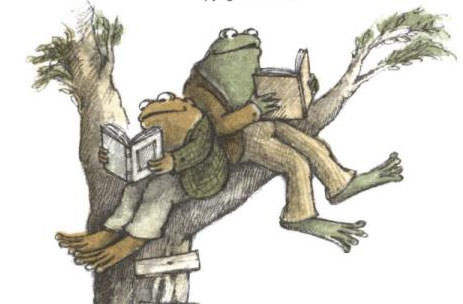
Remember the Frog and Toad story about the time Frog wanted to be alone? He goes out to an island to sit and gaze at the horizon. Worried about him, Toad is afraid that Frog is lonely. So Toad packs up a picnic, hitches a ride on a turtle (since he’s not aquatic, heh, heh), and heads to the island. Unfortunately, the picnic basket falls into the pond. This is only a minor catastrophe; by the time Toad reaches the island, Frog is done being alone. They enjoy soggy sandwiches together.

Don’t you sometimes feel like Frog? Not unhappy or angry, just tired of interacting? Where’s my island? Wrong time of year to feel that way, although a busy store is sometimes an isolating place.

Then I have to remind myself that the moral of the story isn’t that we sometimes like to be alone, but that Frog responds positively to Toad’s presence. He’s sensitive to Toad’s need to make him happy, so he welcomes Toad and his soggy sandwiches. One of my New Year’s resolutions ought to be to follow the example of Frog, to turn away from my brief moments of solitude when someone else brings me sandwiches, soggy as they may be.

Wednesday, January 5, 2011

Photo Journal


A new year begins! We returned from our travels to Indiana, Pennsylvania, and New York without complication. Our travel days seemed to fall on days after huge amounts of snow were deposited in our destinations, so we had all the fun of winter with few of its hazards. While I gather my thoughts and put away laundry, here are some photos to peruse.

My husband put together a last minute St. Lucy day celebration before we departed, right after gymnastics class:

After twelve hours in the car, everyone headed straight into the snow!


Cutting down the Christmas cedar:


The sledding hill behind my parents' house. No one could wait until morning to hit the hill.


One of many snowball fights                                                    A nuthatch on the feeder that received a lot of attention
 

Snow man and friends


Bounty of the hunt, farm raised

Attempts to capture artistic winter scenes


Part of the Christmas treasure trove


Homemade sled run in New York
I took a turn, too.

Skinning a squirrel

More snowballs


The dog barely moved from his sentry watching the cat.

New York farm scene from a hillside we started to hike until the whiner's won out and we turned back to the safety of the comforts of home.
Feeding the chickens
Pajama sledding
Unlicensed ATV driver

Snowboarding down the ramp.

Milking a neighbor's cow


Airborne!
Reading is one form of escape. Running for your life is another.
-Lemony Snicket